From RAG to Agentic Deep Research
How retrieval-augmented generation grew from simple retrieve-then-read pipelines into agents that plan, dig across many sources, and synthesize what they find.
- Date
- Tuesday, November 10, 2026
- Time
- 09:00–12:30
- Place
- Muhe Hall B, Hengqin, China
- Event
- AACL-IJCNLP 2026, Tutorial T5
Or browse the interactive survey at papers.lunadong.com.
A 3.5-hour, half-day, lecture-style tour of modern RAG, grounded in an AI-assisted analysis of 2,000+ papers (2020–2026) and organized around 3 RAG paradigms.
The morning
-
Introduction 30 min
- Motivation
- Factuality Landscape
- RAG at a Glance
-
RAG Deep Dive 60 min
-
Coffee break 30 min
-
Agentic Deep Research 60 min
-
Multi-modal RAG & Future Directions 30 min
-
Multi-modal RAG Survey 15 min
-
Conclusions & Future Directions 15 min
-
One question, asked four ways
A single electric-vehicle question grows across the tutorial, from a simple lookup to an open-ended research task, each technique visibly improving on the last.
-
Simple
What is the battery capacity of a Tesla Model 3?
Expected answer: a single number (e.g., “~60 kWh for the Standard Range, ~82 kWh for the Long Range”).
-
Complex
Which has a longer driving range — the Tesla Model 3 or the Lucid Air?
-
Deep Research
I’m considering buying an electric vehicle in 2026. Which model is the best choice, and why?
Expected answer: a short structured report identifying 2–3 top candidates, comparing them across key dimensions, and offering a recommendation tailored to the user — along with the main trade-offs.
-
Multi-modal
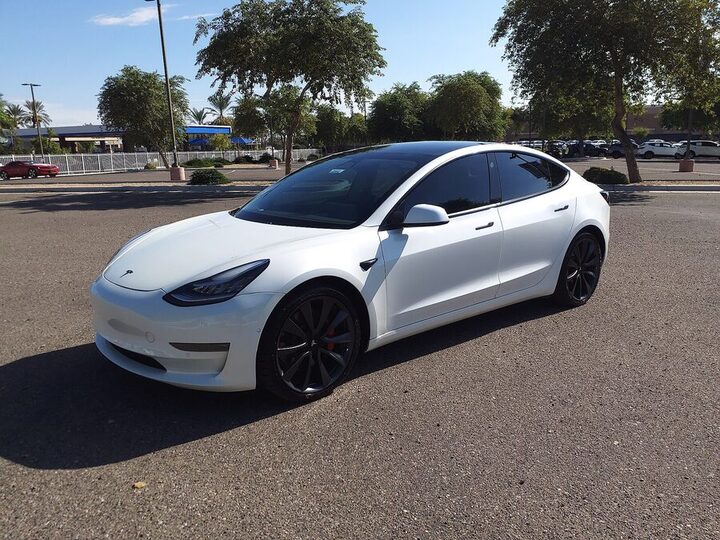 [Photo of an EV in a parking lot]
How far can it go on a full charge?
Expected answer: “That looks like a Tesla Model 3 Long Range — it has an EPA-rated range of about 358 miles on a full charge.”
Abstract
Despite well-known hallucination issues, LLMs have become an increasingly indispensable source of information, and the underlying technology has advanced rapidly to make their answers far more reliable. Early on, Retrieval-Augmented Generation (RAG) emerged as the dominant remedy, grounding LLM responses in external knowledge and evolving from simple retrieve-then-read pipelines into modular, graph-enhanced, and agentic systems. More recently, Agentic Deep Research has pushed the frontier further, equipping LLMs with autonomous planning, multi-hop investigation, and iterative synthesis to tackle open-ended questions that no single retrieval pass can answer. This tutorial offers an in-depth treatment of modern RAG and Deep Research, grounded in an AI-assisted systematic analysis of 2,000+ recent papers (2020–2026). Attendees will leave with a structured roadmap, evidence-backed practical recommendations, and a clear map of open research opportunities.
Three RAG paradigms
- Modular Pipeline RAG
- Five independently optimizable stages: triggering, query rewriting, retrieval, post-processing, and answer generation.
- Graph-Enhanced RAG
- Knowledge graphs and hybrid retrieval, GNN–LLM integration, and multi-hop reasoning for complex QA.
- Agentic Deep Research
- Learned retrieval policies and long-horizon agents that plan, browse, reason, and synthesize cited reports.
Surveys
One survey for each part of the morning, in the order of the schedule, plus one on how surveys like these are generated.
-
A Survey of Retrieval-Augmented Generation: From Searchable Sources to Supported Answers
Follows information from sources through indexing, retrieval, context construction and generation, across text, graph and multimodal sources, comparing methods by what they keep, discard or add.
-
A Survey of Knowledge Graph RAG: From Connected Facts to Supported Answers
Follows evidence from graph construction through retrieval to generation, comparing what each stage preserves and what it loses.
-
A Survey of Agentic RAG: From Retrieval Decisions to Evidence-Grounded Answers
Agentic RAG gives the model control over when and where to search, how to formulate follow-up queries, how to use retrieved evidence, and when to stop.
-
A Survey of Deep Research Agents: From Search to Grounded Synthesis
Follows the evidence in deep research agents from the action that finds it to the claim it supports.
-
Beyond Text Retrieval: A Survey of Multimodal RAG
Follows information from the stored source to the output through four stages: representation, retrieval and selection, generation, and adaptive search and training.
-
From Studies to Supported Claims: A Survey of Automated Survey Generation
Covers the steps that connect studies to claims: selecting papers, recording findings with their conditions, organizing the evidence and writing comparisons grounded in sources.
Speakers
Early inventors of RAG, active researchers, and industry practitioners. The team organized KDD Cup 2024 (CRAG) and 2025 (CRAG-MM).
-
 Xin Luna Dong
Principal Scientist, Meta Wearables AI
ACM & IEEE Fellow
-
 Sanat Sharma
Research Engineer, Meta Reality Labs
-
 Kai Sun
Research Scientist, Meta Reality Labs
-
 Jiaqi Wang
ML Engineer, Meta Reality Labs
-
 Yinglong Xia
Applied Research Scientist, Meta Recommendation Systems
-
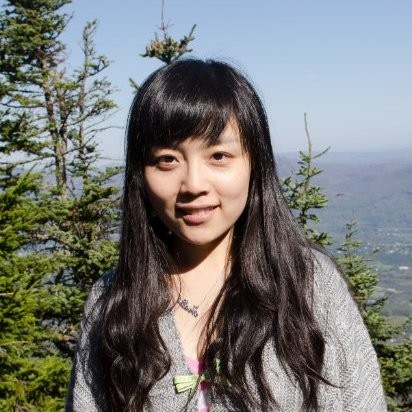 Xiao Yang
Research Scientist, Meta Reality Labs
-
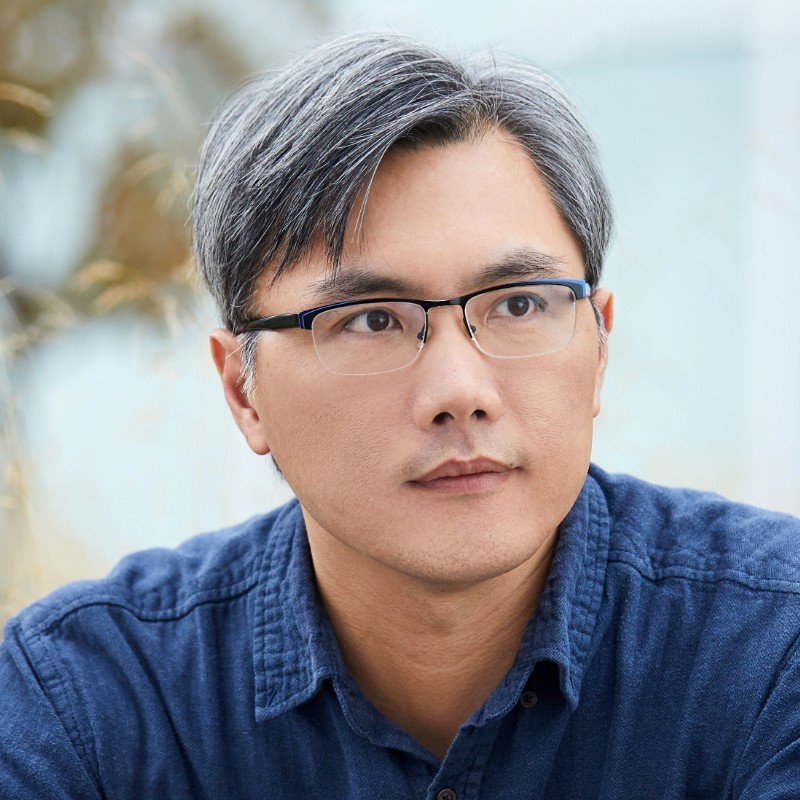 Scott Wen-tau Yih
Research Scientist, Meta FAIR
Affiliate Professor, UW
ACL Fellow
-
 Nan Tang
Associate Professor, Data Science & Analytics, HKUST (Guangzhou)
-
 Franklin Zhang
UW CSE
Online AI Companion
Materials
An interactive survey of ~2,000 papers
Organized by topic and continuously updated. Explore methods, timelines, and benchmarks during and after the session at papers.lunadong.com. This tutorial is itself an instance of AI-facilitated Deep Research.
More related surveys and courses
Browse our growing collection of surveys, reading lists, and short courses on factuality, RAG, and agents, curated and kept current. Explore more on papers.lunadong.com.