📝 Paper Summary
Conversational Recommender Systems (CRS)
User Simulation
The paper introduces PerCRS, a simulation framework using LLM-based agents to model users with specific Big Five personality traits and a system with persuasion strategies, revealing that personality significantly impacts CRS outcomes and optimal strategy selection.
Core Problem
Understanding how user personality traits influence the outcomes and dynamics of conversational recommender systems (CRSs) is challenging due to the difficulty of recruiting diverse real-world users for large-scale studies.
Why it matters:
- Real-world users have varying personalities that affect how they interact with systems and react to recommendations.
- Current evaluation methods often rely on static history or generic simulators, missing the nuance of personality-driven behavioral patterns (e.g., openness to new items, resistance to persuasion).
Key Novelty
PerCRS: A Personality-aware User Simulation Framework for CRS
- Modifies user agents with specific 'Big Five for CRS' (BF4CRS) personality traits (Openness, Conscientiousness, Extraversion, Agreeableness, Neuroticism) tailored for recommendation contexts.
- Equips the system agent with six distinct persuasion strategies (e.g., Social Proof, Emotional Resonance) derived from the Elaboration Likelihood Model.
- Simulates interactions to measure how different traits affect metrics like success rate and turns, and which strategies work best for which traits.
Architecture
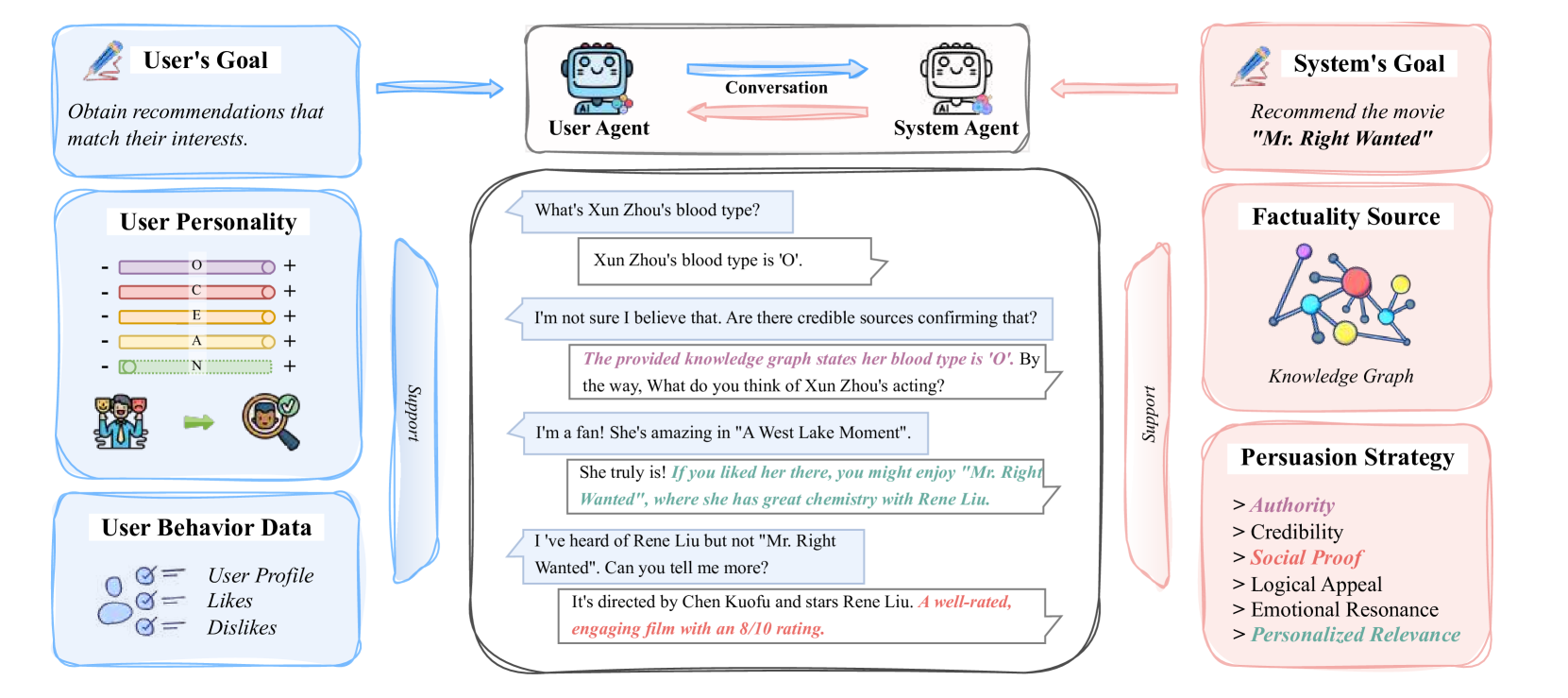
Overview of the PerCRS framework showing the User Agent (with profile/personality), System Agent (with persuasion strategies), and their interaction loop.
Evaluation Highlights
- Personality Consistency: GPT-4o achieved high consistency (F1 ~0.74) between injected traits and generated behavior, while smaller models like InternLM-2.5 struggled (F1 ~0.48).
- Impact on Success: Agreeableness is the most impactful trait; users with high Agreeableness reach agreements faster. High Extraversion also correlates with higher success rates.
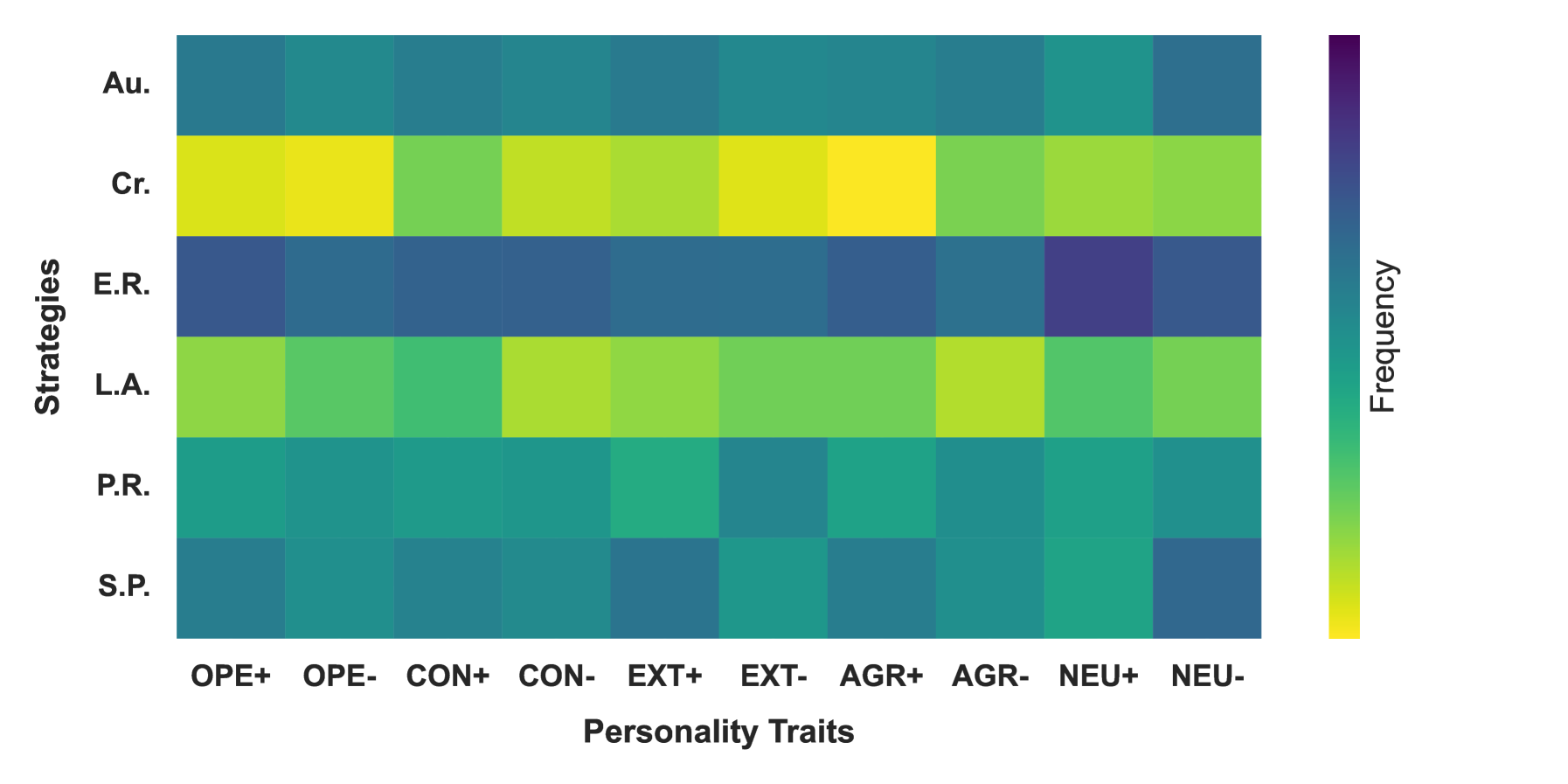
- Strategy Effectiveness: Emotional Resonance is the most universally effective strategy. Conscientious users prefer Credibility and Logical Appeal more than other groups.
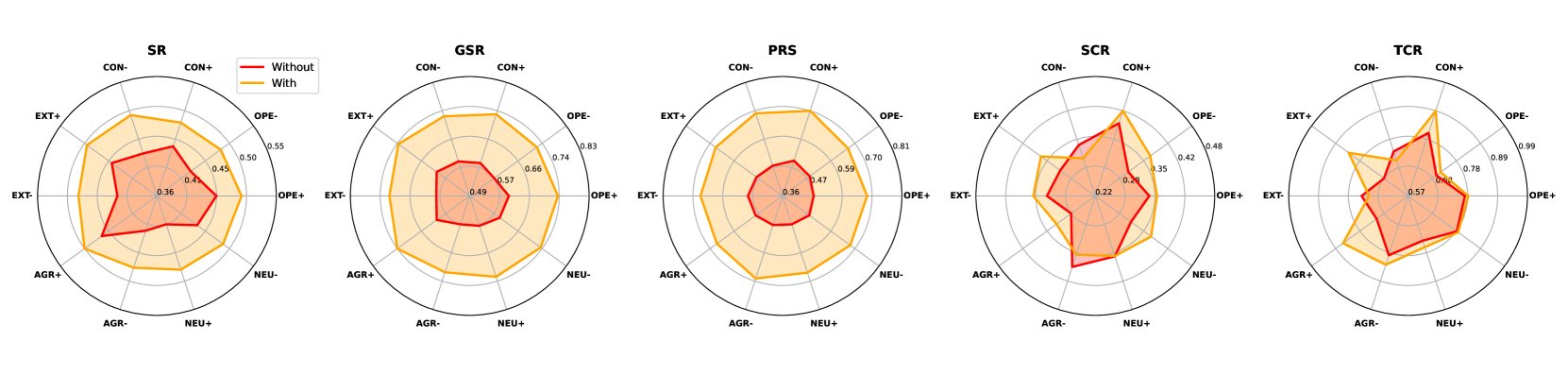
- Persuasion Impact: Incorporating persuasion strategies significantly improved Success Rate (SR) and General Success Rate (GSR) across all tested LLMs (e.g., LlaMA-3 SR improved from 0.43 to 0.48).
Breakthrough Assessment
6/10
The paper proposes a solid framework for simulating personality in CRS, which is a valuable contribution to evaluation methodologies. It provides empirical evidence of LLMs' ability to role-play personalities and the resulting impact on recommendation metrics, though the core innovation is primarily an application of existing LLM capabilities to a specific simulation niche.