📝 Paper Summary
Medical Recommendation Systems
Causal Inference in Recommender Systems
CausalMed replaces standard co-occurrence modeling with causal discovery to identify specific disease-medication relationships and dynamically weighs disease importance based on a patient's specific health state.
Core Problem
Existing methods rely on co-occurrence, failing to distinguish which specific medication treats which disease, and treat all diseases in a visit with equal weight regardless of their role (primary vs. secondary).
Why it matters:
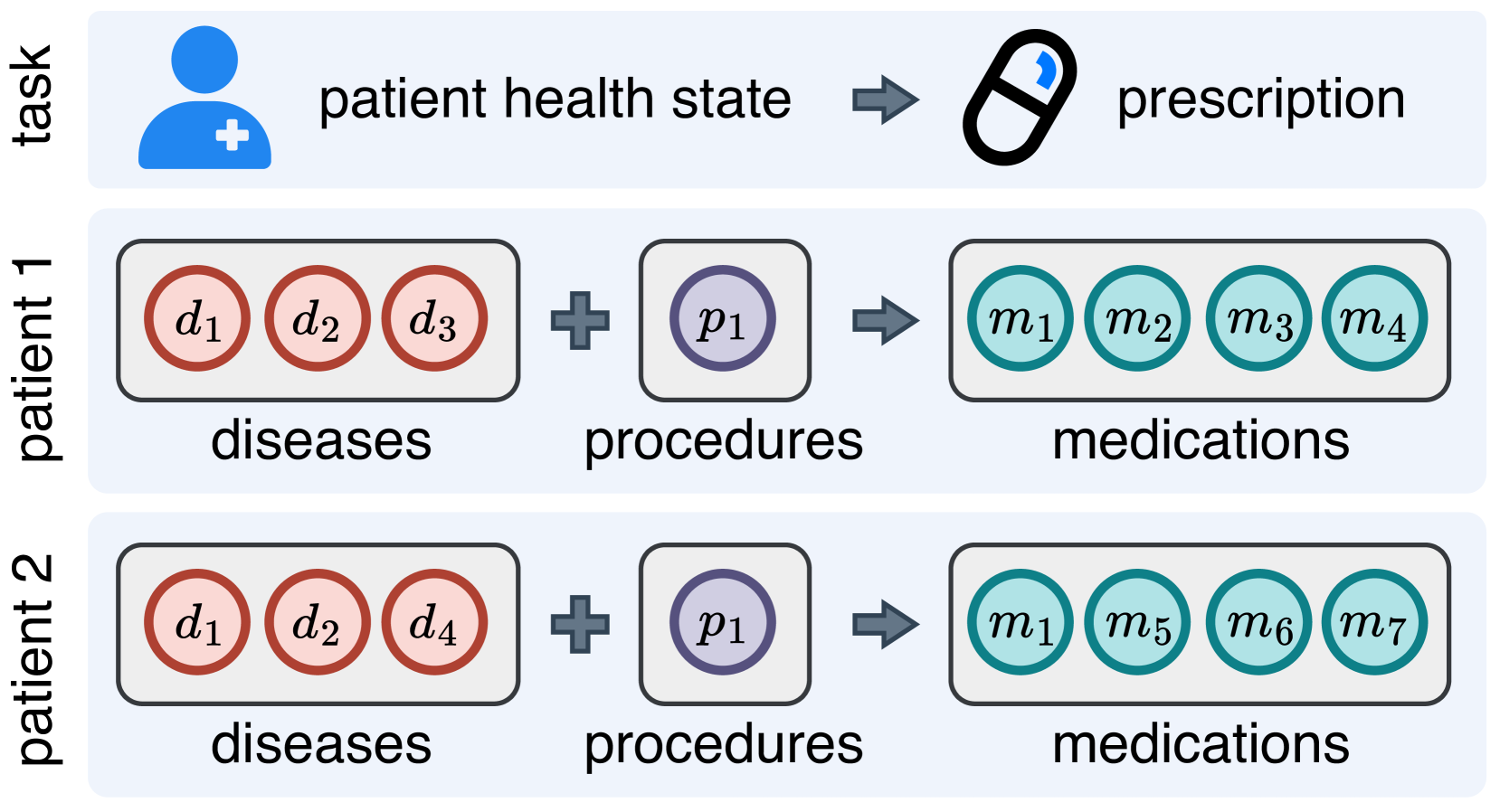
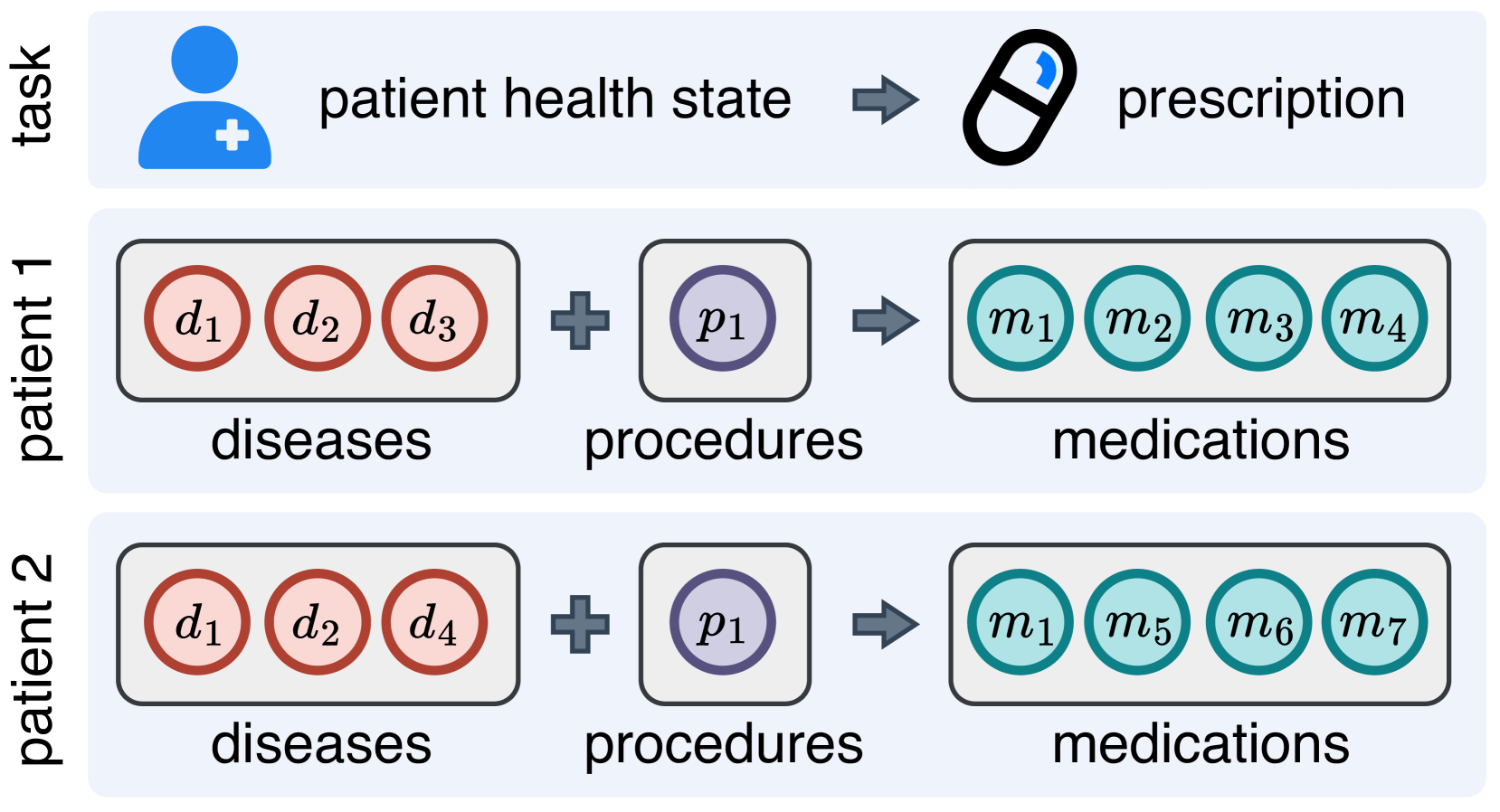
- Medical records with 80-90% similarity in diseases often result in only ~48% similarity in prescribed medications, indicating high variance in individual treatment needs.
- Co-occurrence creates spurious correlations, recommending drugs that appear frequently together but don't causally treat the patient's specific condition.
- Failure to distinguish primary causes from secondary symptoms leads to imprecise patient representations and less effective or safe treatment plans.
Concrete Example:
Two patients might both have 'hypertension' and 'diabetes'. For Patient A, hypertension causes kidney issues (primary), while for Patient B, it's a side effect of another condition (secondary). Standard models sum these diseases equally, whereas CausalMed identifies the causal direction to prioritize medications targeting the primary driver.
Key Novelty
Causal-based Patient Health State Modeling (CausalMed)
- Uses causal discovery (GIES) to strip away spurious co-occurrences and build a graph where edges represent true pathological influence between diseases.
- Categorizes diseases into roles (e.g., 'Causal/Primary' vs. 'Effect/Secondary') based on their position in the causal graph, rather than treating them as a flat list.
- Quantifies the therapeutic effect of medications on specific diseases using causal estimation, creating point-to-point (disease-to-drug) rather than set-to-set mappings.
Architecture
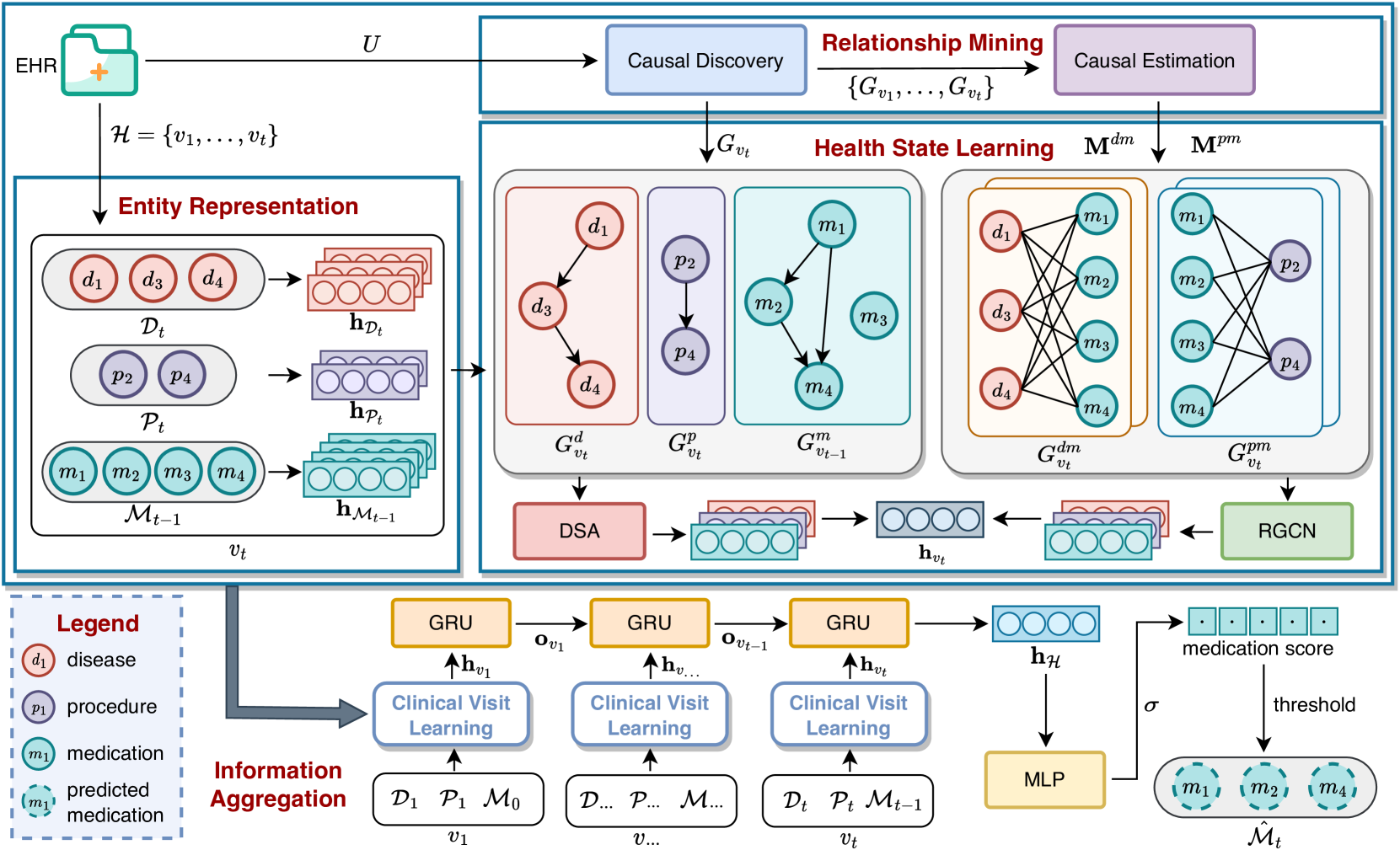
The overall architecture of CausalMed, illustrating the flow from a single clinical visit to final medication prediction.
Evaluation Highlights
- Achieved substantial accuracy gains (Jaccard) over state-of-the-art baselines like COGNet and MoleRec on the MIMIC-III dataset.
- Reduced Drug-Drug Interaction (DDI) rates significantly compared to baselines, improving safety.
- Demonstrated that patients with similar disease sets require distinct medication regimens, which CausalMed captures better than co-occurrence models.
Breakthrough Assessment
7/10
Strong methodological contribution by applying causal discovery to medical records, moving beyond simple co-occurrence. Significant practical improvements in safety (DDI) and accuracy.