📝 Paper Summary
Biomedical Control Systems
Personalized Medicine
Cyber-Medical Systems
This paper presents a control-theoretic algorithm for personalizing chemotherapy by calculating the minimal impulsive drug doses required to maintain drug concentration above a computed inhibitory threshold, validated in mice.
Core Problem
Standard chemotherapy uses maximum tolerated doses with long rest periods, often causing toxicity or drug resistance; optimizing Low-Dose Metronomic (LDM) therapy is mathematically difficult because drug injections are discrete, positive-only impulsive inputs.
Why it matters:
- Personalizing treatments can reduce severe side effects and costs compared to generic high-dose protocols
- Engineering control methods often fail in medical contexts because they do not account for the strict positivity constraint (cannot remove drug from blood) and impulsive nature (injections) of the system
- Handling inter- and intra-patient variability is crucial, as fixed protocols may be ineffective for rapid metabolizers or toxic for slow metabolizers
Concrete Example:
A standard protocol might inject 6 mg/kg every 10 days. If a patient metabolizes the drug quickly, the tumor regrows significantly during the break. This system models the decay and calculates the exact minimal dose needed to prevent regrowth, potentially resulting in smaller, more frequent injections.
Key Novelty
Positive Impulsive Control with Min-Max Robustness
- Formulates chemotherapy as a 'positive impulsive control' problem, calculating the minimal sum of doses required to keep the drug concentration above a Minimal Inhibitory Concentration (MIC)
- Introduces a 'Min-Max' robust therapy strategy using interval arithmetic to guarantee tumor inhibition even when patient parameters fluctuate within a known range (worst-case scenario)
- Combines pharmacokinetic (PK) and pharmacodynamic (PD) modeling to dynamically adjust the MIC target based on tumor growth parameters
Architecture
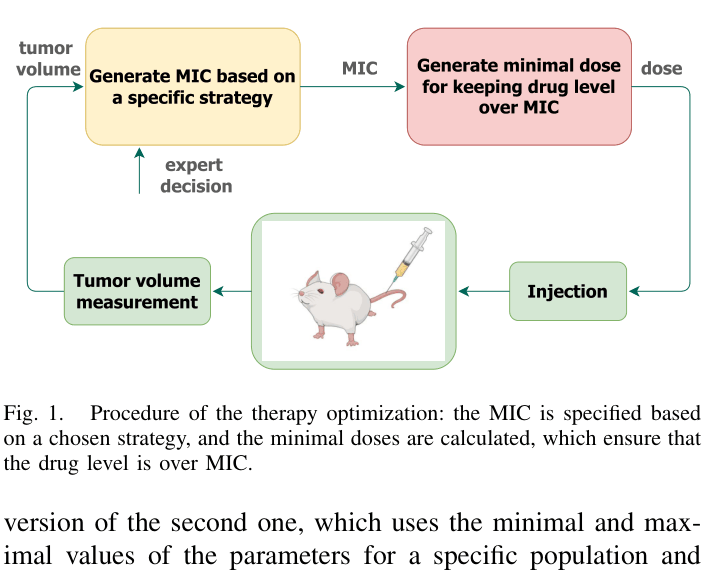
The closed-loop workflow of the therapy optimization process
Evaluation Highlights
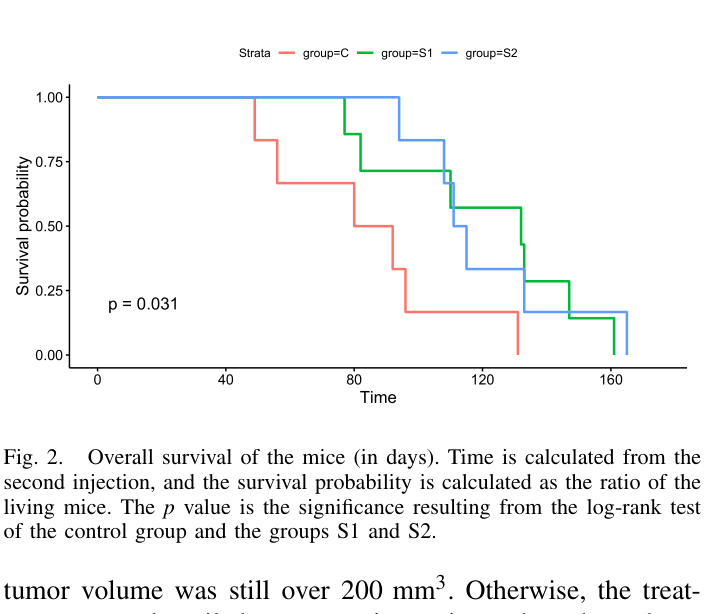
- Statistically significant increase in overall survival for the proposed method compared to standard protocol (p-value = 0.031, log-rank test)
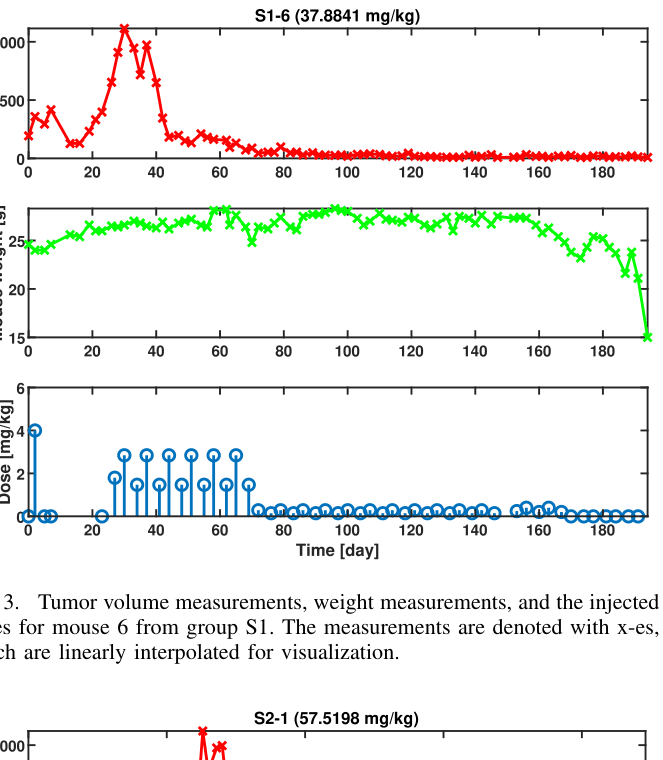
- Successfully maintained tumor remission in experimental groups using adaptive low doses, whereas control group tumors relapsed after treatment cessation
- Demonstrated feasibility of switching between 'Maximal Effect' and 'Minimal Effective Dose' strategies based on real-time tumor response
Breakthrough Assessment
7/10
Strong application of control theory to a biological problem with rigorous in vivo validation (mice) showing statistical significance. While the math is established, the end-to-end cyber-medical implementation and survival benefit are significant.