📝 Paper Summary
Text-to-Image Generation
Personalization (P13N)
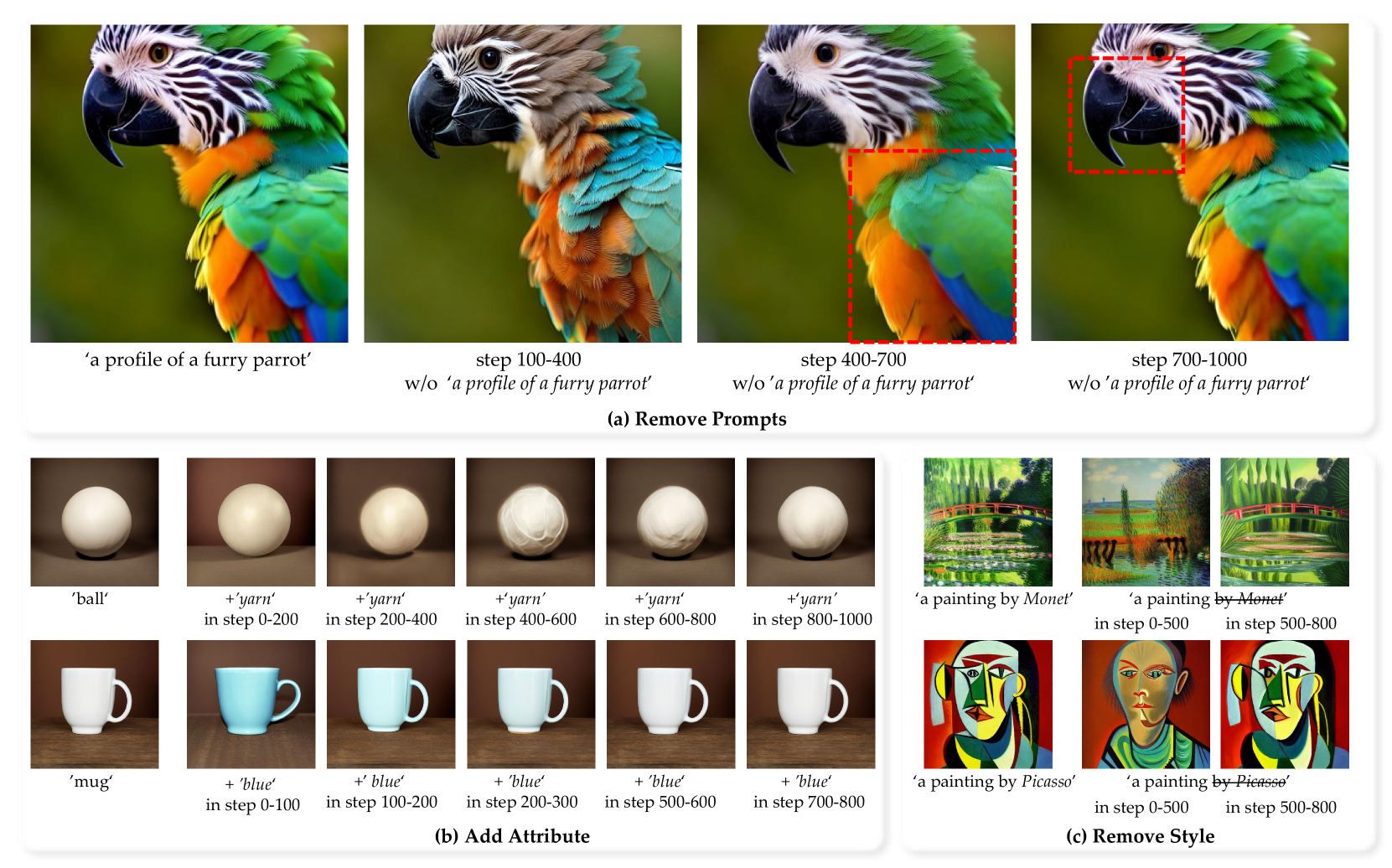
ProSpect decomposes the textual conditioning of diffusion models into stage-specific embeddings, exploiting the observation that models generate layout, content, and style at different frequency stages.
Core Problem
Existing personalization methods invert an image into a single static textual embedding, which fails to disentangle specific visual attributes like material, style, and layout.
Why it matters:
- Using a single embedding for all diffusion steps limits editability, as changing the prompt often alters the entire image structure rather than just the desired attribute
- Current methods like Textual Inversion or DreamBooth struggle to transfer a specific style (e.g., 'yarn texture') without bleeding content (e.g., 'cat shape') into the new image
- Fine-tuning models for every concept is computationally expensive and difficult to combine for multi-attribute generation
Concrete Example:
When DreamBooth tries to transfer a 'yarn' material from a cat image to a sphere, it tends to generate cat-like objects because it cannot separate the material from the content. ProSpect can apply the yarn texture while respecting the sphere's original shape.
Key Novelty
Prompt Spectrum Space (P*) and ProSpect Inversion
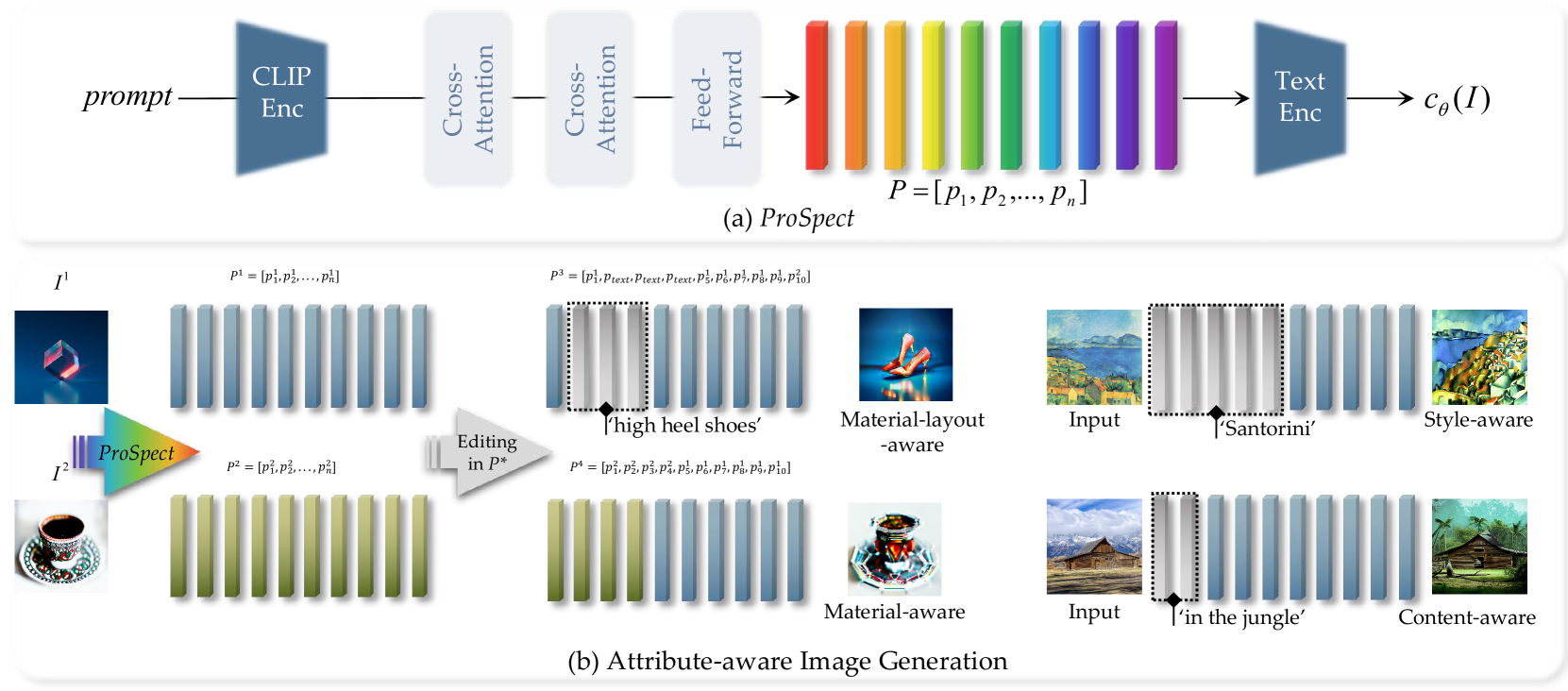
- Expands the textual conditioning space from a single vector to a sequence of vectors (Prompt Spectrum), where each vector guides a specific stage of the denoising process
- Leverages the discovery that diffusion models generate attributes in a frequency-based order: layout (low frequency) → content → material/style (high frequency)
- Uses a hypernetwork to invert a single image into this spectrum of embeddings, allowing independent swapping of layout, content, or style embeddings during generation
Architecture
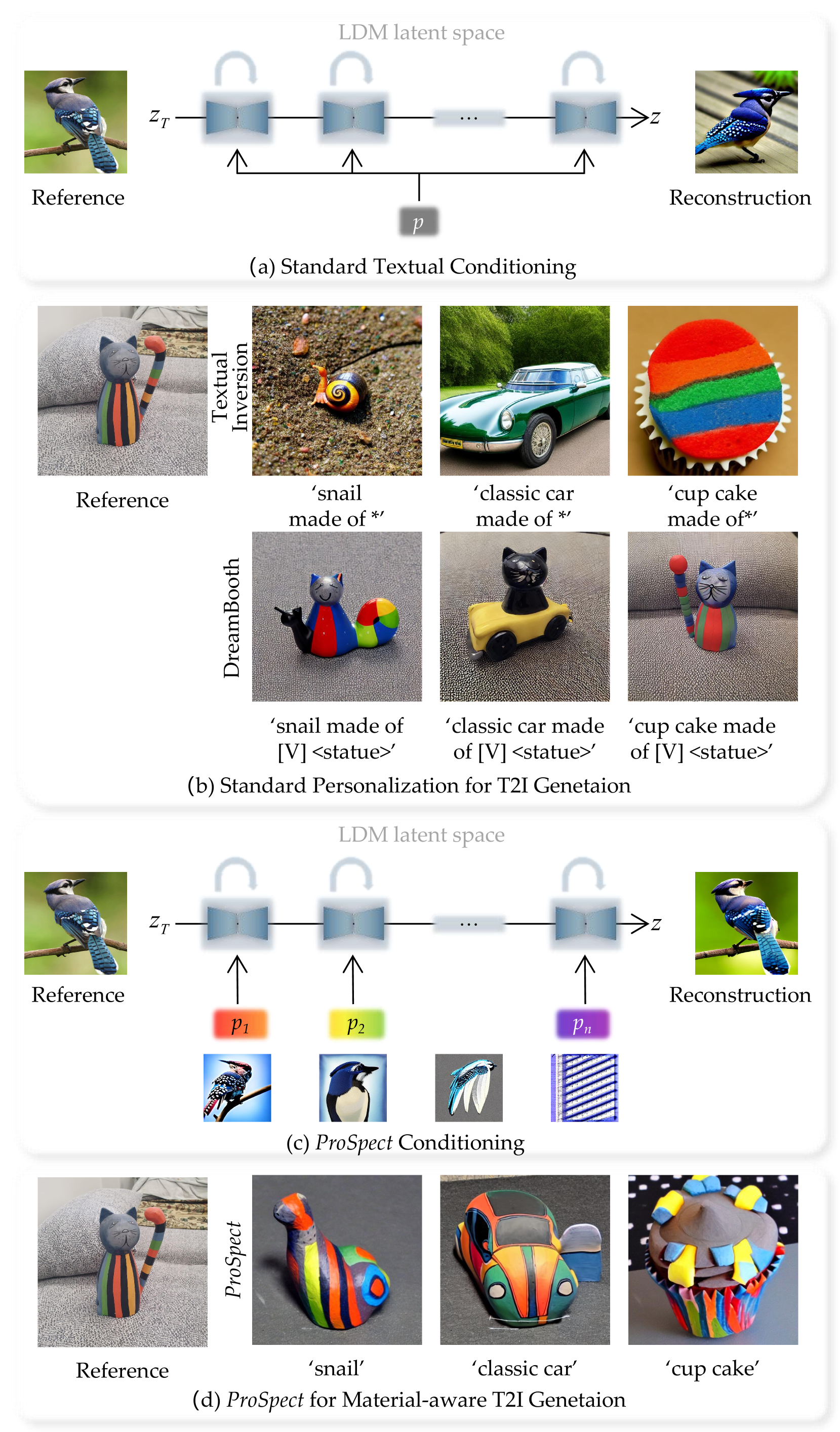
Comparison of standard Textual Inversion space (P) vs. Prompt Spectrum Space (P*).
Breakthrough Assessment
7/10
Offers a clever insight into the temporal dynamics of diffusion generation (frequency/stages) to solve the entanglement problem in personalization without full model fine-tuning.