📝 Paper Summary
On-device LLMs
Smartphone Sensing
The paper introduces an end-to-end framework that runs LLMs entirely on smartphones, using local sensor data (like screen text and surveys) to provide personalized, privacy-preserving recommendations without cloud connectivity.
Core Problem
Cloud-based LLM personalization faces critical privacy risks, high latency, and cost barriers, while lacking access to real-time, fine-grained personal context (like current sensor data) needed for true personalization.
Why it matters:
- Privacy and security: Uploading personal sensor data to the cloud risks sensitive information leakage.
- Latency and reliability: Cloud dependencies are unacceptable for critical real-time applications like healthcare monitoring.
- Cost: Cloud APIs are expensive (e.g., $75 per million tokens for high-end models), limiting extensive personal usage.
Concrete Example:
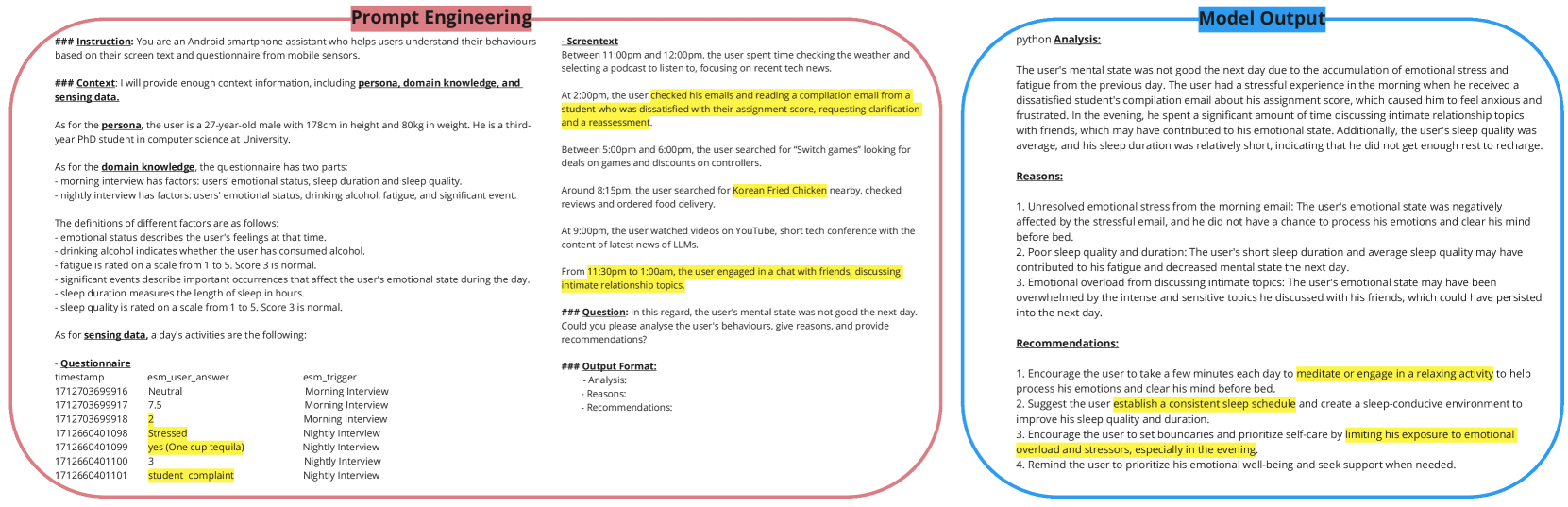
A student suffering from stress due to a complaint email and poor sleep might receive generic advice from a cloud LLM lacking that context. This framework detects the specific stressors (email content, sleep data) locally and generates tailored advice like 'limit exposure to emotional overload' without data leaving the phone.
Key Novelty
On-Device Sensing-to-LLM Pipeline
- Integrates a mobile sensing framework (AWARE-Light) directly with a local LLM execution environment (Termux/llama.cpp) on a single device.
- Uses a structured prompt engineering approach to inject real-time local sensor data (screen text, questionnaires) into the LLM context window for immediate personalization.
- Ensures all data processing and inference happen locally, trading off some model size for absolute privacy and zero data egress.
Architecture
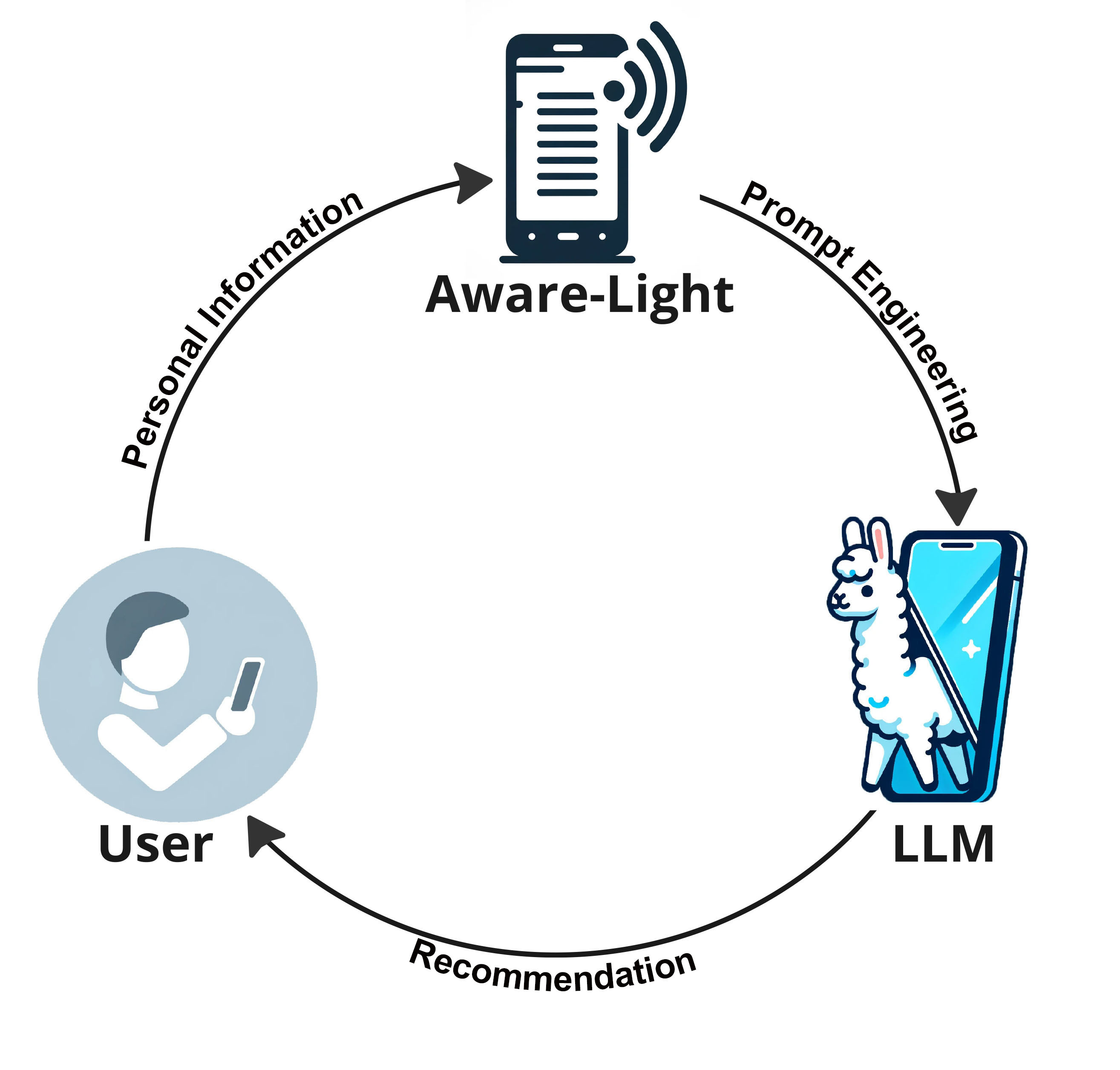
End-to-end pipeline framework for on-device personalization.
Evaluation Highlights
- Demonstrated functional on-device inference with Llama-3-8B on a Google Pixel 8 Pro.
- Quantified resource usage: ~16.5% RAM usage and ~3% battery drain during a 5-minute inference session.
- Qualitatively validated personalized recommendations for a user experiencing stress, successfully identifying specific triggers (e.g., complaint emails) from local data.
Breakthrough Assessment
5/10
A solid proof-of-concept for on-device personalization combining sensing and LLMs. It validates feasibility but relies on existing tools (llama.cpp, AWARE) rather than introducing novel model architectures or training methods.