📝 Paper Summary
Human-AI Collaboration
AI Auditing
Future of Work
This paper audits the U.S. workforce by surveying 1,500 workers and 52 AI experts to map occupational tasks against worker desires for automation versus technological feasibility, revealing critical misalignments.
Core Problem
We lack a systematic understanding of which specific occupational tasks workers actually *want* AI agents to automate or augment, and how those desires align with current technical capabilities.
Why it matters:
- Current narratives rely on binary 'automate-or-not' views or usage logs (e.g., chatbot history) that reflect early adopters rather than broader workforce needs
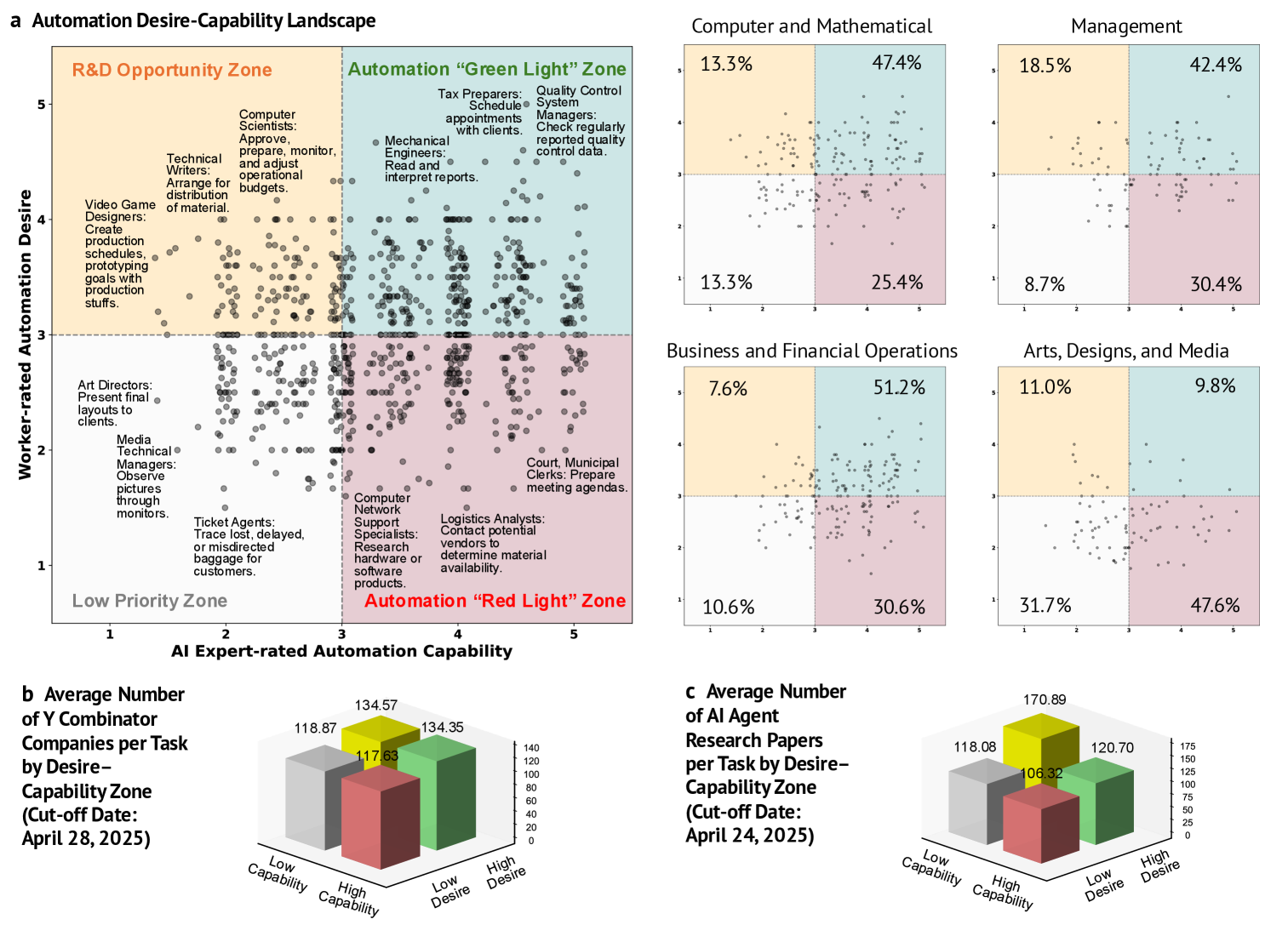
- Investments are skewed: 41% of Y Combinator AI startups focus on tasks where workers have low desire for automation or where technology is already capable but unwanted
- Ignoring worker agency risks job displacement anxiety and friction in adoption, as workers prefer augmentation (partnership) over full automation for many tasks
Concrete Example:
In the 'Arts, Designs, and Media' sector, only 17.1% of tasks receive positive automation desire ratings. While technically capable of generating content, AI agents here face resistance because workers value creative control, preferring AI for project management rather than replacing the core artistic process.
Key Novelty
WORKBank Database & Human Agency Scale (HAS)
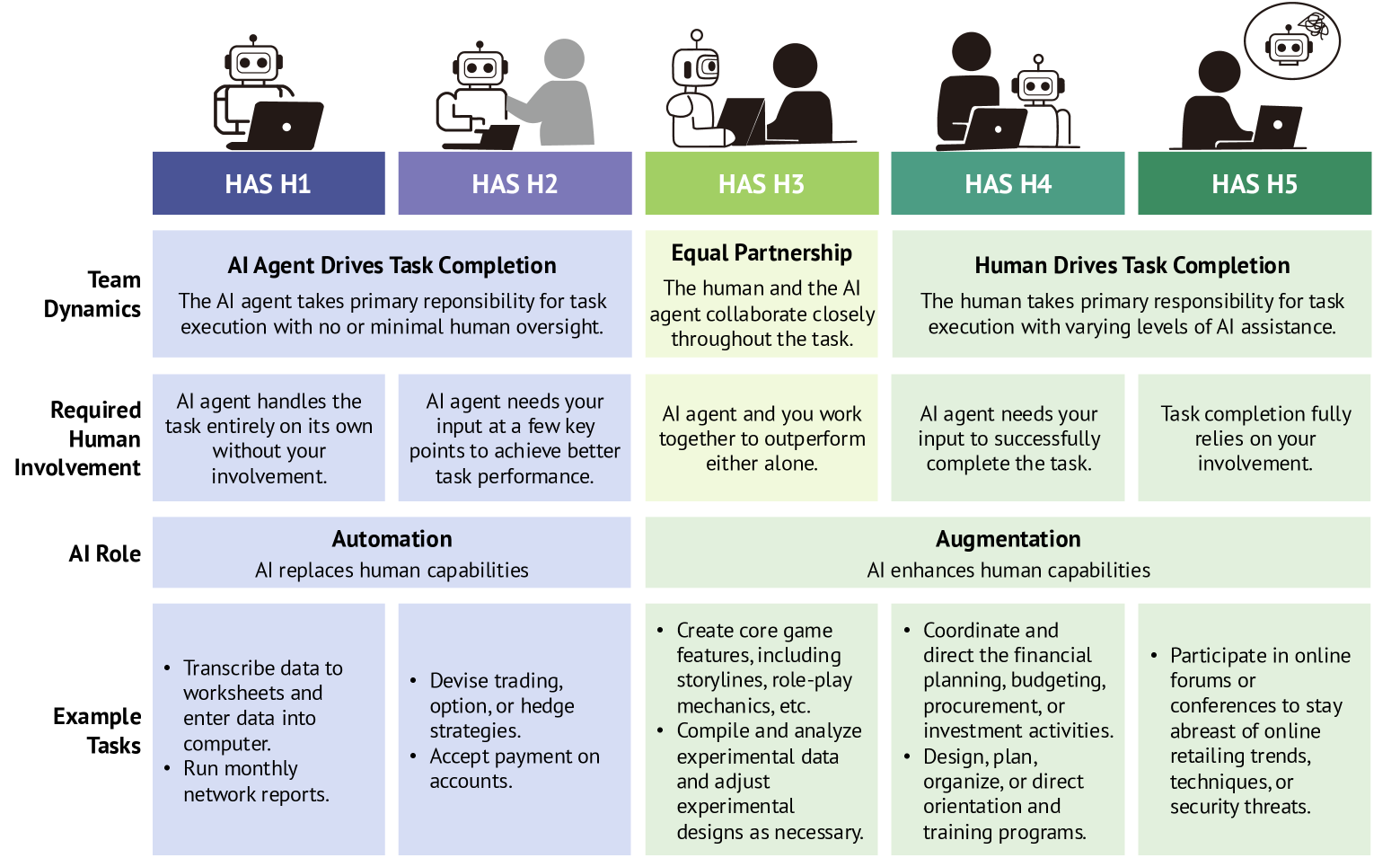
- Introduces the Human Agency Scale (H1-H5) to quantify the necessary level of human involvement, moving beyond a binary automation view to a spectrum including augmentation and partnership
- Constructs 'WORKBank' by cross-referencing O*NET occupational tasks with survey data from 1,500 domain workers (desire/agency) and 52 AI experts (technical feasibility)
- Uses an audio-enhanced survey format to allow workers to verbally reflect on their daily tasks, yielding more grounded and nuanced preference data than standard text surveys
Architecture
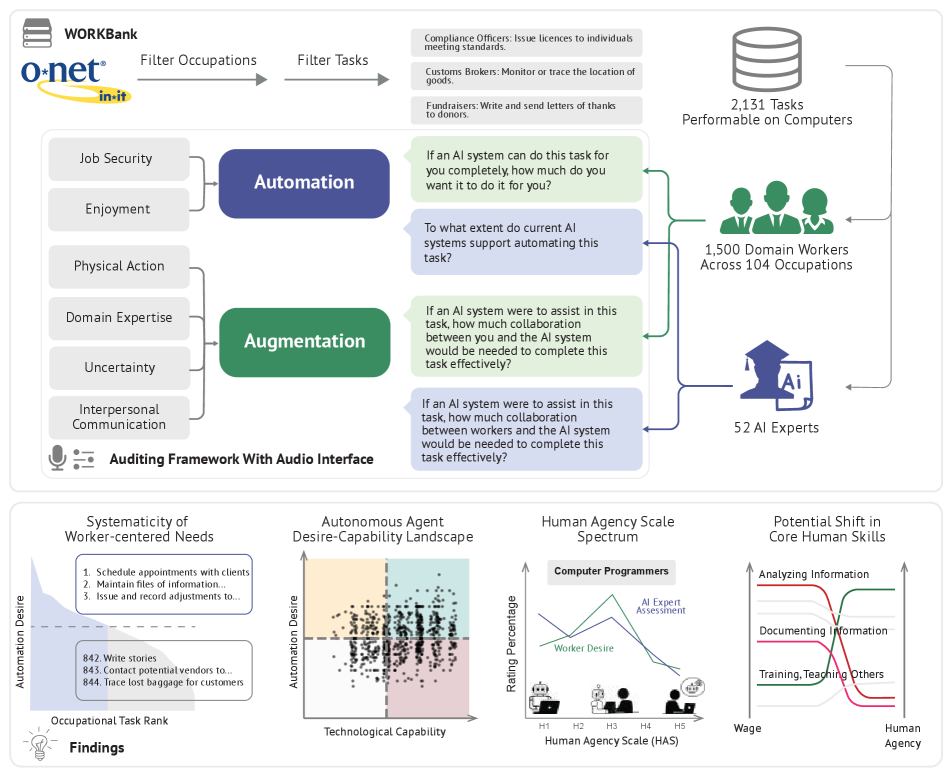
The Auditing Framework workflow
Evaluation Highlights
- Workers express positive desire for automation in 46.1% of tasks, primarily to free up time for high-value work, though this varies significantly by sector
- 41.0% of Y Combinator company-task mappings fall into the 'Low Priority' or 'Red Light' zones (low worker desire), indicating a mismatch between capital investment and worker needs
- For 45.2% of occupations, the dominant preferred interaction model is H3 (Equal Partnership), signaling a strong demand for collaborative augmentation rather than full automation
Breakthrough Assessment
8/10
Provides the first large-scale, grounded dataset (WORKBank) linking technical AI agent capabilities with actual worker preferences at the task level. Effectively challenges the 'automation-first' narrative.