📊 Experiments & Results
Evaluation Setup
Audit of 103 papers and analysis of 171 survey responses
Benchmarks:
- Literature Corpus (Meta-analysis) [New]
- Practitioner Survey (Opinion Survey) [New]
Metrics:
- Percentage of papers defining hallucination
- Percentage of papers acknowledging sociotechnical factors
- Prevalence of specific metrics (Statistical, Data-driven, Human)
- Practitioner familiarity and sentiment
- Statistical methodology: Descriptive statistics for close-ended survey questions; Thematic analysis for open-ended responses
Key Results
| Benchmark | Metric | Baseline | This Paper | Δ |
|---|---|---|---|---|
| Audit of the literature reveals a significant lack of clarity and consensus in defining hallucination. | ||||
| Literature Corpus | Percentage defining 'hallucination' | N/A | 42.7% | N/A |
| Literature Corpus | Percentage acknowledging sociotechnical nature | N/A | 2.9% | N/A |
| Audit of metrics shows a fragmented landscape with heavy reliance on statistical proxies. | ||||
| Literature Corpus | Use of Statistical Metrics | N/A | 35.2% | N/A |
| Literature Corpus | Use of Mixed Methodologies | N/A | 28.4% | N/A |
| Practitioner survey reveals strong preference for alternative terminology. | ||||
| Practitioner Survey | Preference for 'Fabrication' | N/A | 40.46% | N/A |
| Practitioner Survey | Perception as Weakness | N/A | 92% | N/A |
Experiment Figures
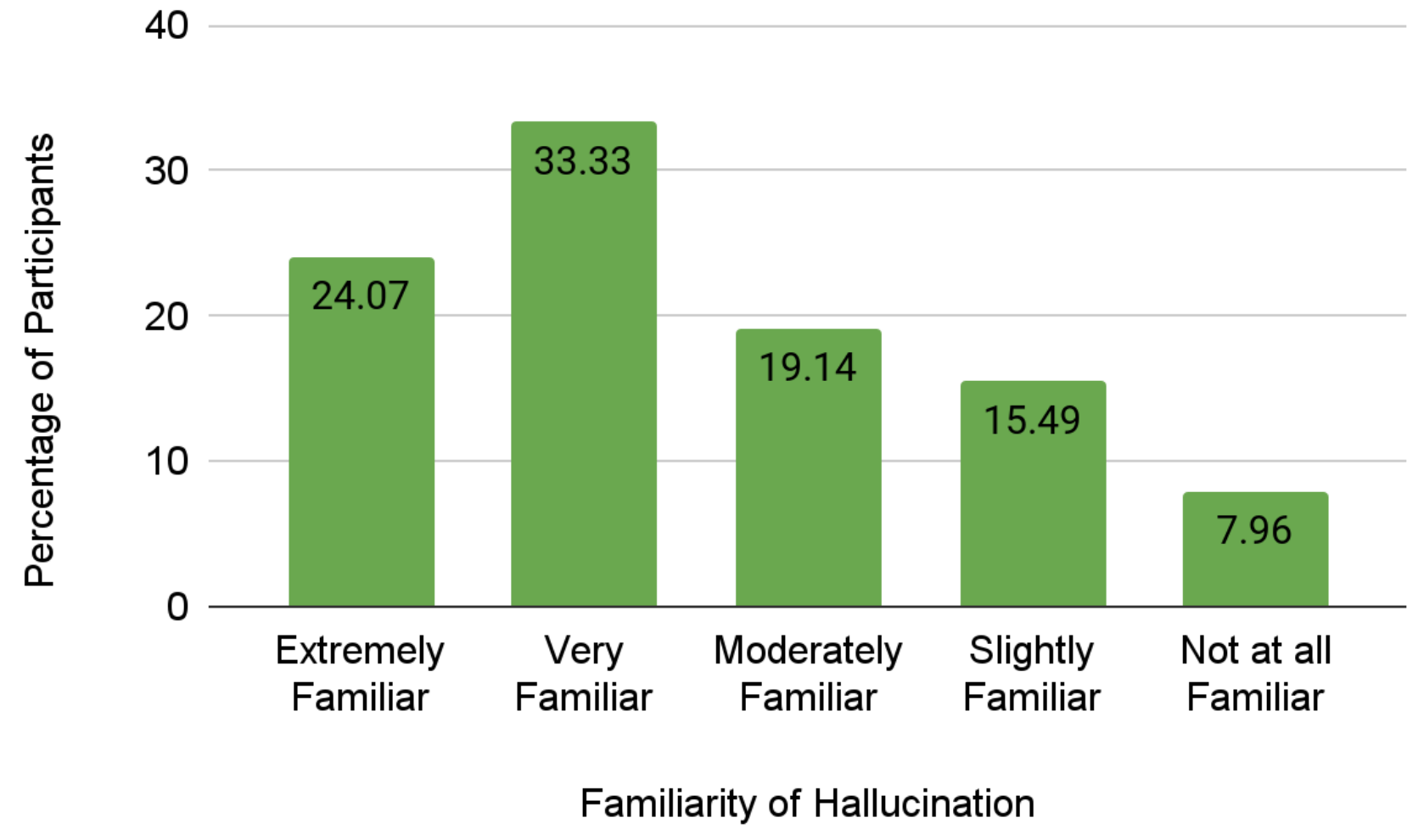
Bar chart showing the familiarity of survey respondents with the concept of 'hallucination' in AI.
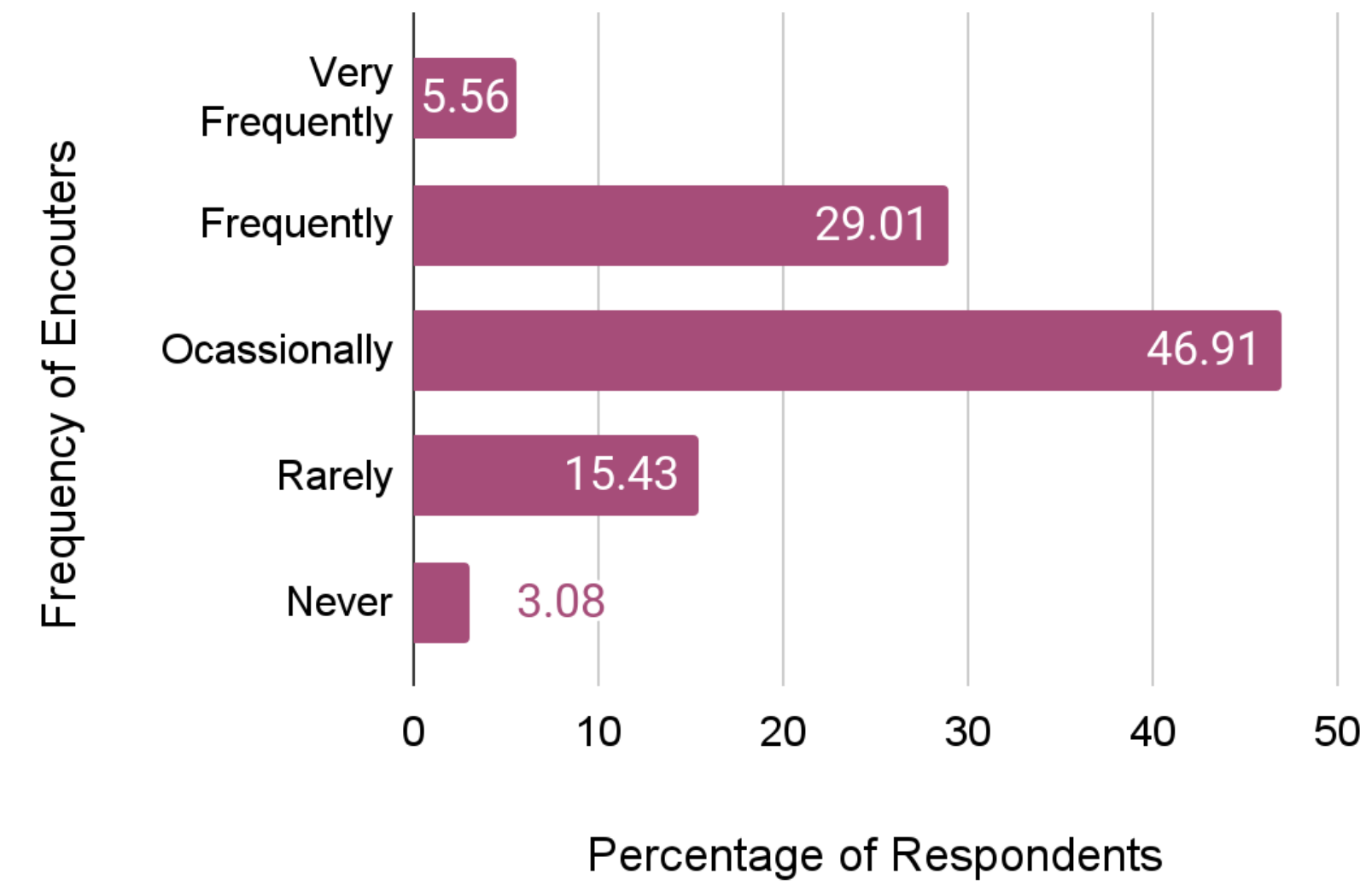
Bar chart showing the frequency with which practitioners encounter hallucinated content in their work.
Main Takeaways
- The field suffers from a lack of shared vocabulary; over half of the papers discussing hallucination fail to define it.
- There is a disconnect between the term 'hallucination' (anthropomorphic) and technical reality, with many practitioners preferring 'fabrication' or 'confabulation'.
- Measurement is highly inconsistent, utilizing 25 different statistical metrics and 18 distinct datasets across just 103 papers.
- A minority of practitioners (~12%) view hallucination positively as a driver of creativity, a perspective largely absent from the audited literature.