📝 Paper Summary
Hallucination Detection
Black-box LLM Monitoring
Generalization Bounds
HalMit models the specific generalization boundary of a black-box agent using fractal-based query sampling to detect hallucinations that fall outside the agent's reliable domain.
Core Problem
LLM agents suffer from hallucinations where outputs contradict facts, yet existing detection methods require white-box access or rely on unreliable self-confidence scores.
Why it matters:
- Hallucinations undermine credibility in high-stakes fields like law, medicine, and finance where errors have catastrophic consequences
- Commercial LLMs are often closed-source (black-box), rendering white-box detection methods unusable for deployed applications
- Universal generalization bounds are too loose for billion-parameter models, failing to distinguish reliable from unreliable responses effectively
Concrete Example:
In a legal domain, an agent might confidently hallucinate a nonexistent court case. Current methods using global thresholds on semantic entropy fail because high entropy doesn't always equal hallucination; HalMit detects this by checking if the query lies outside the specific 'law' boundary it mapped.
Key Novelty
Per-Agent Generalization Bound Modeling via Fractal Exploration
- Models the 'competence boundary' of a specific black-box agent by treating valid knowledge as a geometric shape in semantic space
- Uses a multi-agent system to probe this boundary with 'fractal sampling'—iteratively generating queries via deduction, analogy, and induction to map where the agent starts failing
- Detects hallucinations at runtime by checking if a new user query falls outside this pre-mapped safe zone in the vector space
Architecture
The multi-agent system architecture for HalMit, showing the interaction between the Core Agent, Query Generation Agents, and the Target Agent.
Evaluation Highlights
- Significantly outperforms existing approaches in hallucination monitoring effectiveness (qualitative claim, exact aggregate improvement not summarized in text)
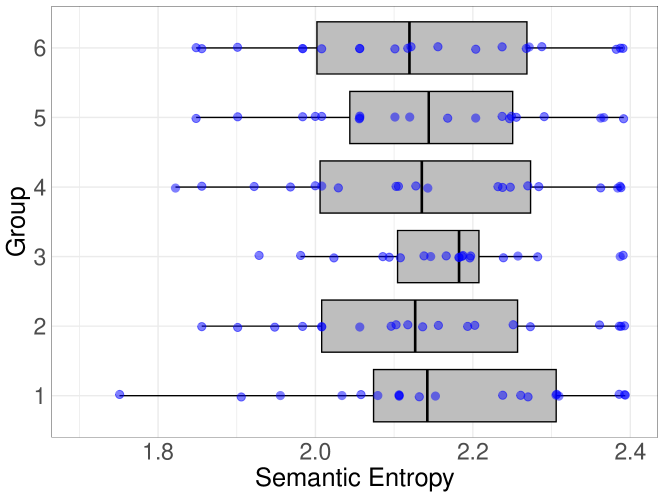
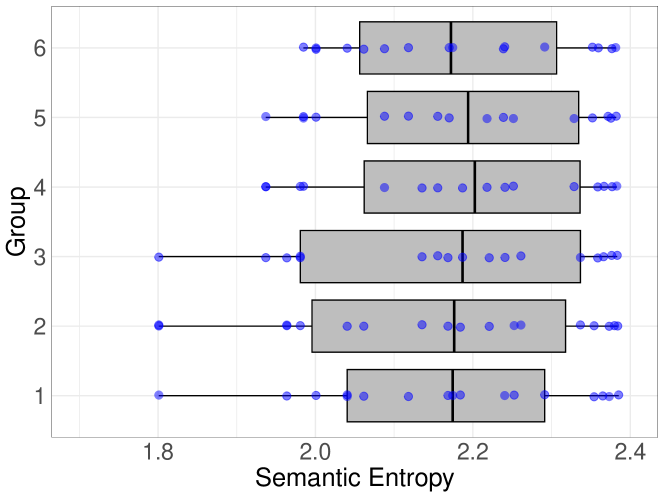
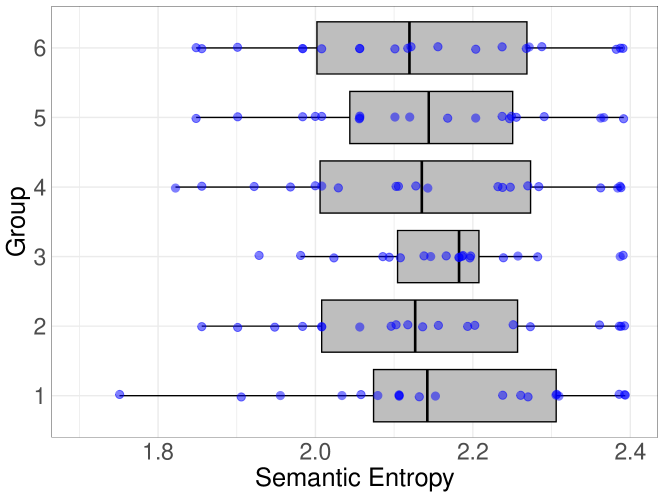
- Demonstrates that hallucination patterns are statistically stable within specific domains (e.g., Law, Medicine) but vary significantly across them
- Operates successfully as a black-box watchdog without accessing internal model weights or gradients
Breakthrough Assessment
7/10
Novel framing of hallucination detection as a boundary modeling problem using fractal sampling. Strong potential for black-box systems, though dependence on extensive pre-probing may limit scalability.