📝 Paper Summary
Conversational personalization
RAG-based personalization
Educational technology (EdTech)
gAI-PT4I4 integrates zero-shot sentiment analysis and finite automaton-based difficulty adjustment into a VR Digital Twin environment to personalize Industrial 4.0 workforce training.
Core Problem
Training the Industrial 4.0 workforce requires access to expensive specialized hardware and often suffers from low retention rates, particularly among underrepresented minorities due to a lack of personalized support and engagement.
Why it matters:
- Current labor shortages require massive reskilling efforts that traditional, one-size-fits-all online courses cannot effectively address due to lack of hands-on simulation.
- Students from marginalized communities often face knowledge dependencies and lack of belonging, which standard automated tutoring systems fail to detect or mitigate emotionally.
- Traditional deep learning sentiment analysis requires extensive labeled training data, which is scarce for specific domain-expert tutoring contexts.
Concrete Example:
In a VR PPE inspection training, a student might struggle and express frustration ('I don't understand this'). A standard system might just repeat the instruction. This system detects the negative sentiment and, if performance is low (<80%), the finite automaton lowers the difficulty while the RAG-tutor provides specific, empathetic guidance.
Key Novelty
gAI-PT4I4 (Generative AI-based Personalized Tutor for Industrial 4.0)
- Combines low-fidelity Digital Twins in VR with an 'Interactive Tutor' that uses zero-shot sentiment analysis on student dialogue to gauge emotional state without prior model training.
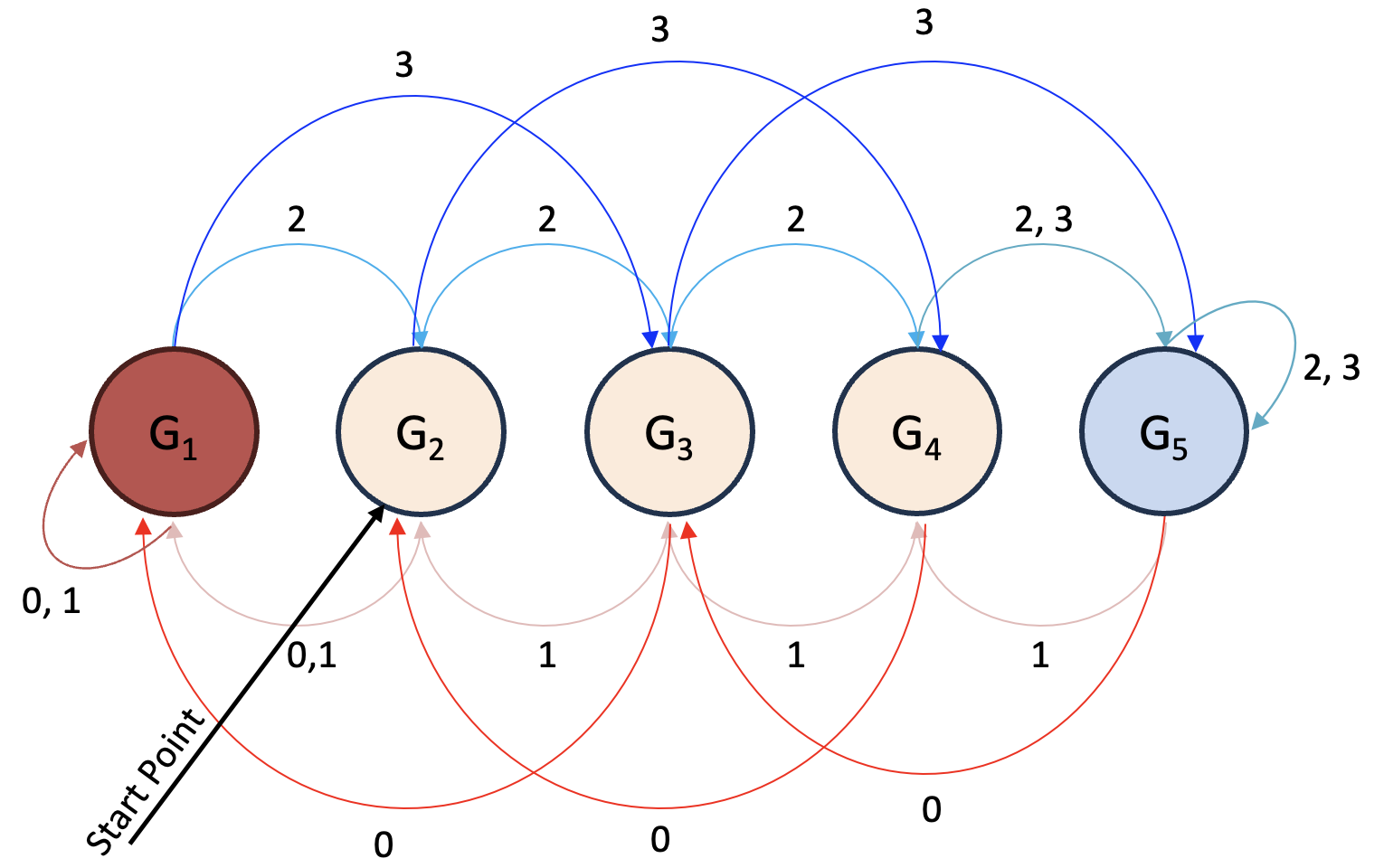
- Uses a Finite Automaton to dynamically adjust exercise difficulty based on a strict performance threshold (80% accuracy), keeping students in a 'flow' state.
- Integrates GraphRAG to ground the LLM's responses in domain-specific Industrial 4.0 knowledge (e.g., packet sniffing, machinery operation) to prevent hallucinations.
Architecture
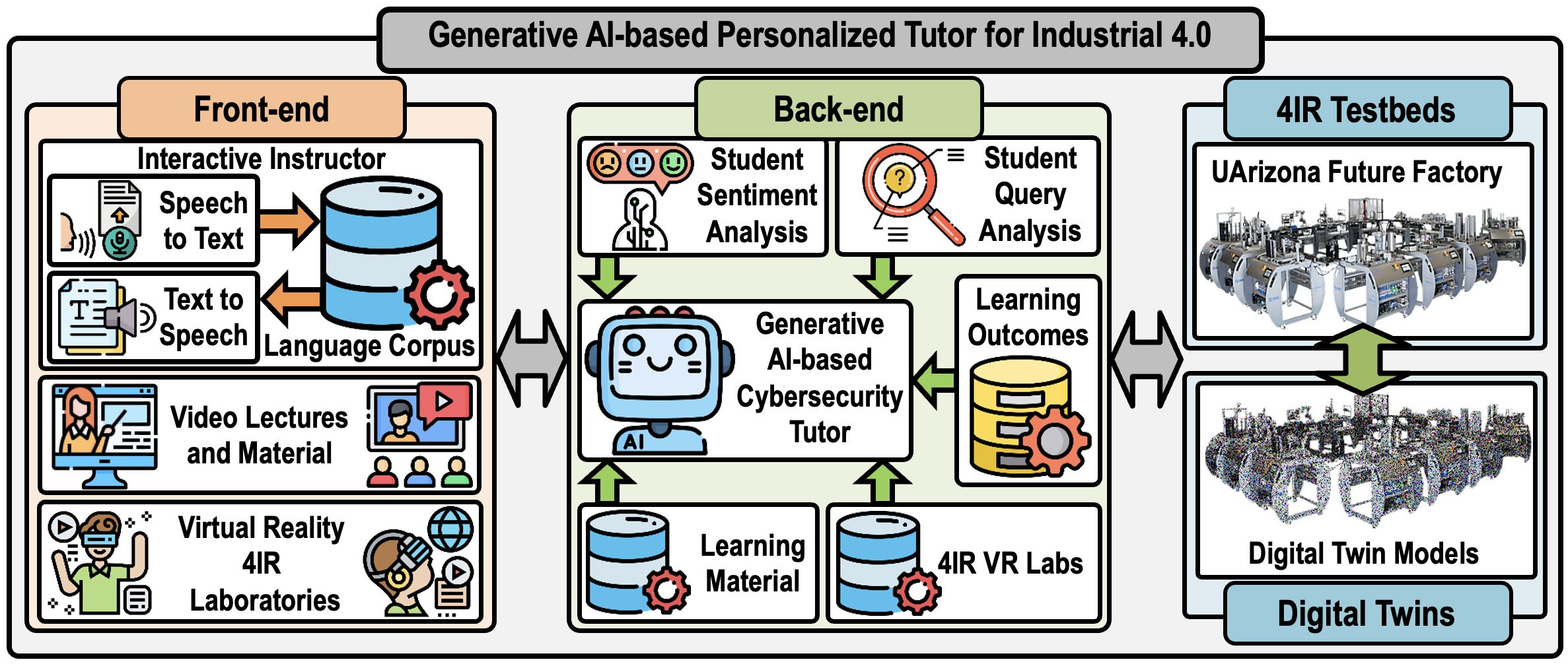
The gAI-PT4I4 framework architecture
Evaluation Highlights
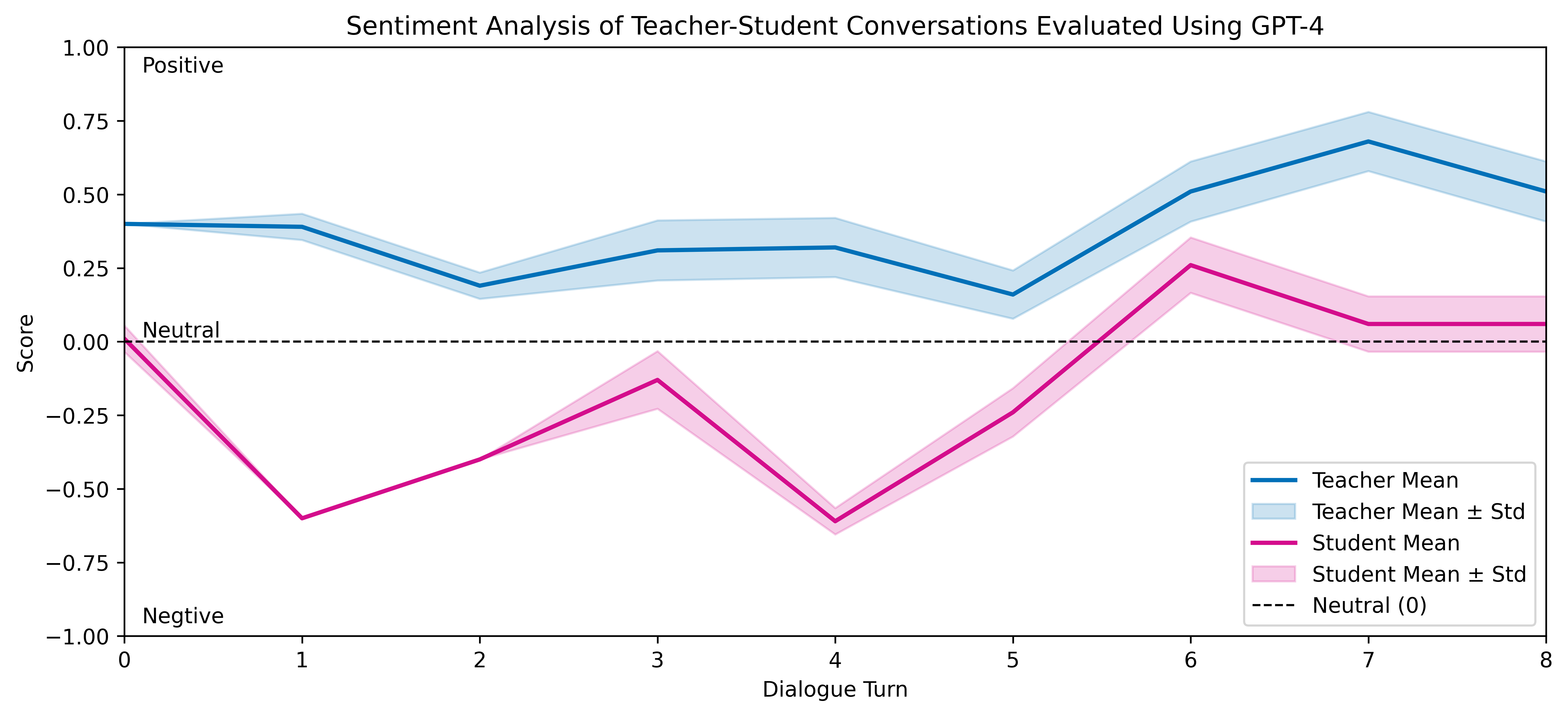
- Zero-shot sentiment analysis using GPT-4 achieved 86% accuracy on the EduTalk Sentiment Dataset, outperforming traditional supervised models (CNN, GRU) on similar tasks.
- In a user study with 22 volunteers, the adaptive difficulty mechanism improved average task accuracy from 78% to 83%.
- The adaptive mechanism reduced the average training completion time from 68.93 seconds to 48.94 seconds.
Breakthrough Assessment
4/10
The integration of VR, RAG, and sentiment analysis is a solid application engineering effort for EdTech, but the core ML novelty is limited (prompt engineering on existing models). The creation of a labeled education dataset is a useful contribution.