📝 Paper Summary
Multimodal Reward Modeling
Vision-Language Alignment
Skywork-VL Reward is a multimodal reward model trained on a large-scale curated dataset including reasoning traces, achieving state-of-the-art performance in evaluating both standard and reasoning-heavy vision-language outputs.
Core Problem
Existing multimodal reward models lack generalizability across diverse tasks and fail to effectively evaluate advanced reasoners that produce complex inference steps.
Why it matters:
- Aligning Vision-Language Models (VLMs) with human preference is crucial for safety and utility but remains challenging.
- Current reward models struggle with the complex reasoning outputs from newer 'system 2' style VLMs.
- High-quality, diverse preference data for multimodal reasoning is scarce, limiting the effectiveness of alignment training.
Concrete Example:
When a VLM generates a complex step-by-step solution to a physics problem based on an image, standard reward models might fail to distinguish a subtle reasoning error from a correct derivation, whereas Skywork-VL Reward uses specific reasoning preference data to catch this.
Key Novelty
Dual-Source Data Curation & Two-Stage Training
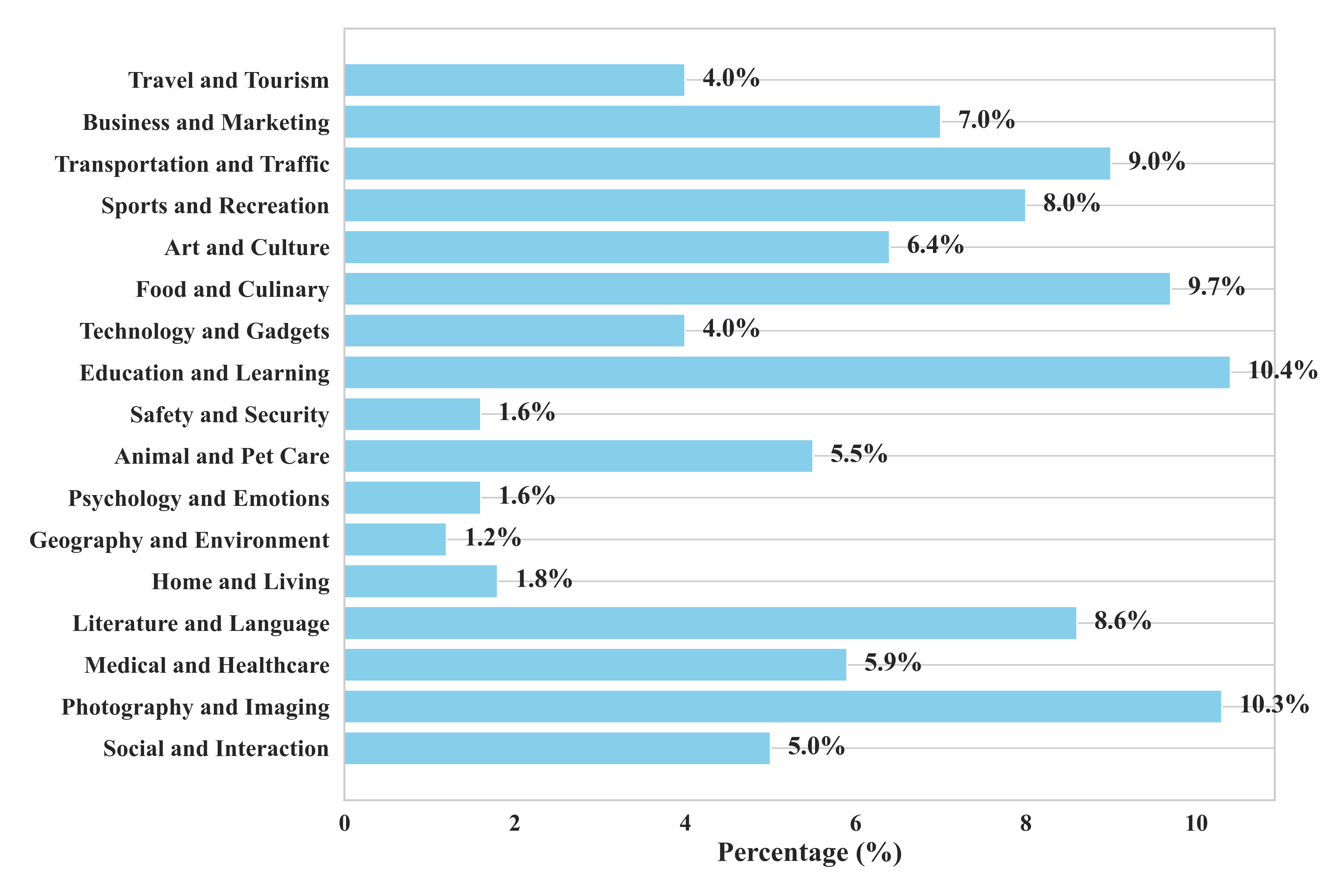
- Constructs a massive preference dataset (190k pairs) by integrating standard VLM outputs with advanced reasoning traces generated by models like Skywork R1V and Deepseek R1.
- employs a two-stage training strategy: first fine-tuning on multimodal data for vision-language alignment, then incorporating pure-text data to boost general reasoning and prevent catastrophic forgetting of text capabilities.
Architecture
Conceptual architecture of Skywork-VL Reward based on Qwen2.5-VL
Evaluation Highlights
- Achieves state-of-the-art accuracy on VL-RewardBench among open-source models.
- Preference data generated by this model improves downstream VLM reasoning significantly when used in Mixed Preference Optimization (MPO) training.
- Maintains competitive performance on the text-only RewardBench, unlike many multimodal models that degrade on pure text tasks.
Breakthrough Assessment
8/10
Strong performance on benchmarks and a robust data curation pipeline for reasoning tasks make it a significant contribution to open-source multimodal alignment tools.