📊 Experiments & Results
Evaluation Setup
Quadruped locomotion in simulation and on real robot (Solo-12)
Benchmarks:
- Flat Terrain (Locomotion)
- Rough Terrain (Stairs, Slopes) (Locomotion)
Metrics:
- Constraint Violation Rate
- Tracking Error (Velocity)
- Energy Consumption
- Success Rate (Terrain Traversal)
- Statistical methodology: Not explicitly reported in the paper
Key Results
| Benchmark | Metric | Baseline | This Paper | Δ |
|---|---|---|---|---|
| Comparative analysis on flat terrain shows CaT achieves comparable tracking performance to baselines while significantly reducing constraint violations and energy usage. | ||||
| Flat Terrain | Tracking Error (lin. vel.) | 0.04 | 0.05 | +0.01 |
| Flat Terrain | Constraint Violation (Style) | 0.52 | 0.00 | -0.52 |
| Flat Terrain | Mechanical Power (W) | 58.2 | 45.1 | -13.1 |
Experiment Figures
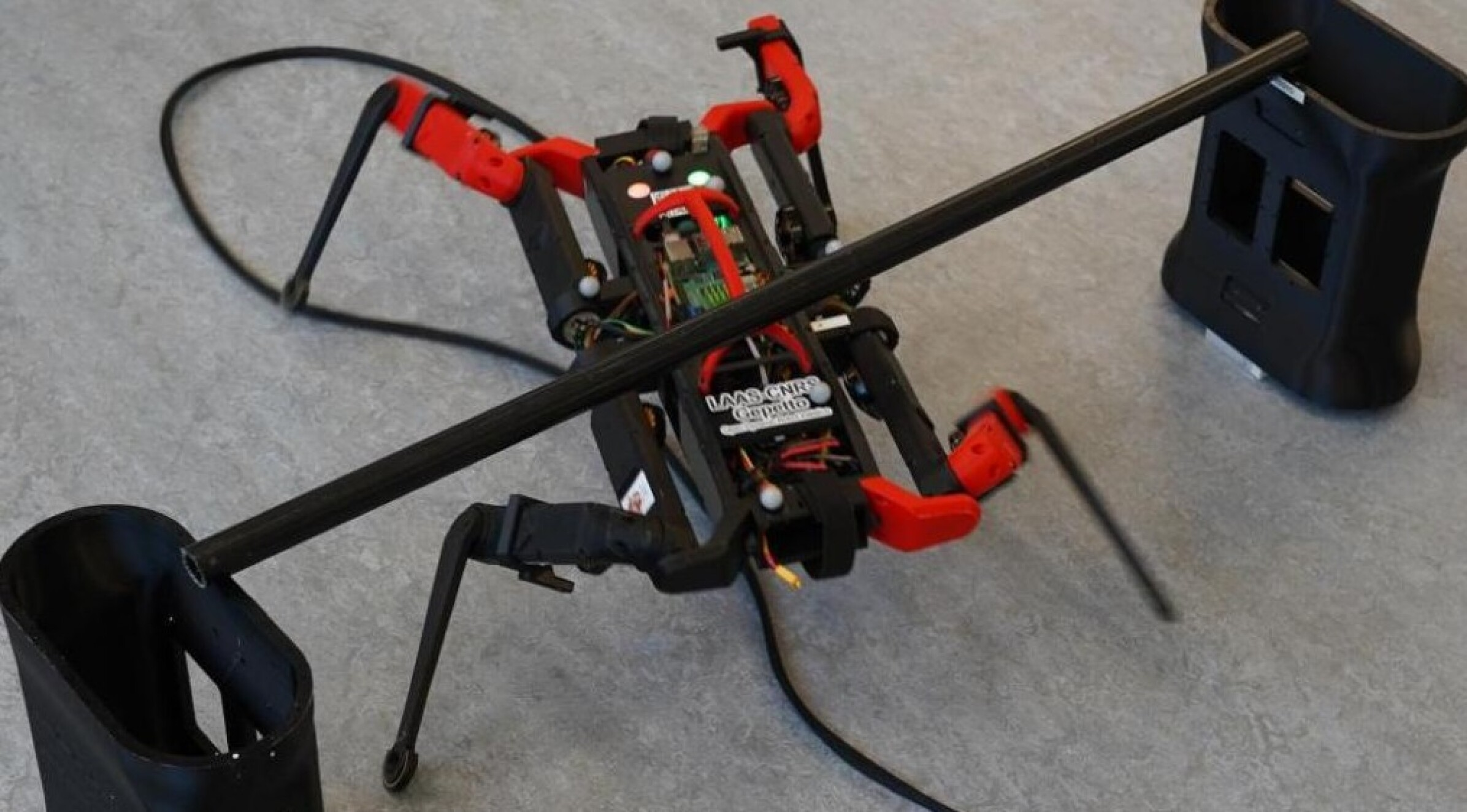
Plots of constraint variables (foot height, joint velocities) over time for CaT vs Baselines.
Main Takeaways
- CaT successfully enforces both safety (hard) and style (soft) constraints on real hardware without complex tuning.
- The method enables the robot to traverse challenging obstacles (stairs, slopes) that constrained baselines often fail to learn due to over-conservatism.
- Stochastic terminations provide a dense enough signal to learn recovery behaviors, unlike sparse binary terminations.