📝 Paper Summary
Medical Vision-Language Models (Med-VLM)
Radiology Report Generation / VQA
Reinforcement Learning for Reasoning
MedVLM-R1 uses reinforcement learning with rule-based rewards to teach a small medical vision-language model to generate explicit reasoning steps before answering, without requiring expensive reasoning annotations.
Core Problem
Existing medical VLMs trained via supervised fine-tuning (SFT) often overfit to training distributions, struggle with out-of-distribution generalization, and fail to provide the transparent step-by-step reasoning required for clinical trust.
Why it matters:
- Clinicians and patients need to understand *why* a diagnosis was reached, not just the final classification, for trust and regulatory approval
- SFT relies on expensive, hard-to-scale expert reasoning data (Chain-of-Thought), limiting the ability to train robust models
- Models trained only on final answers via SFT prone to shortcut learning and degrade significantly when shifting domains (e.g., MRI to CT)
Concrete Example:
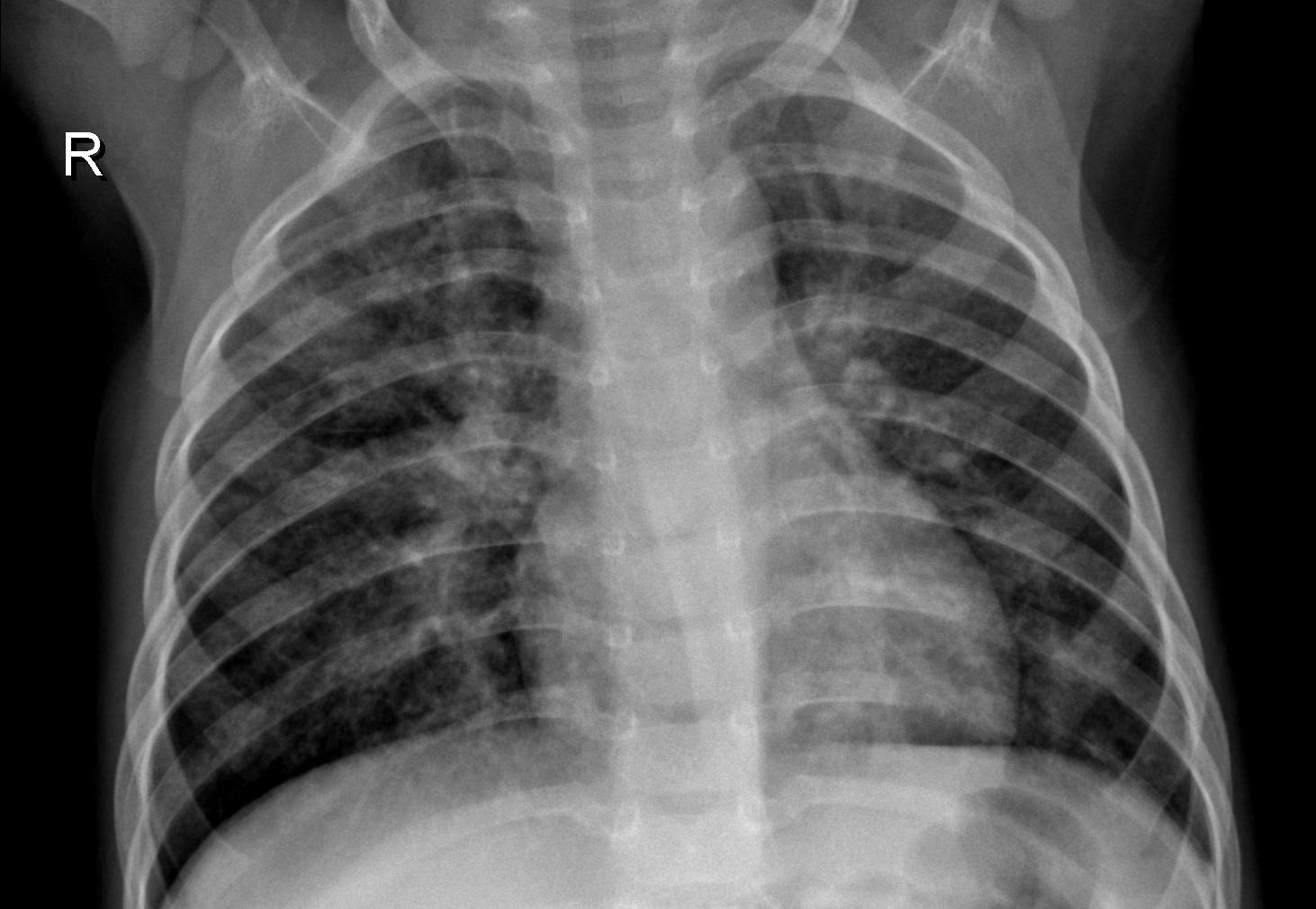
In complex queries, standard models might guess the correct answer via pattern matching without understanding. MedVLM-R1, however, generates a '<think>' trace (e.g., analyzing pulmonary nodules) before the '<answer>', though failure cases show it sometimes uses process-of-elimination rather than pure medical deduction.
Key Novelty
MedVLM-R1 (Medical VLM via Reinforcement Learning)
- Replaces Supervised Fine-Tuning (SFT) with Group Relative Policy Optimization (GRPO) to incentivize reasoning using only final-answer labels
- Uses a composite reward function (Format Reward + Accuracy Reward) to force the model to self-generate a '<think>' block followed by an '<answer>' block
- Achieves 'emergent reasoning' where the model learns to explain its logic to maximize rewards, without ever seeing ground-truth reasoning traces during training
Architecture
The training framework of MedVLM-R1 using GRPO.
Evaluation Highlights
- Boosts accuracy from 55.11% to 78.22% across MRI, CT, and X-ray benchmarks compared to the base model
- +16% improvement on CT and +35% on X-ray (out-of-distribution) compared to SFT counterparts trained on the same MRI data
- Outperforms the significantly larger Qwen2-VL-72B and domain-specific HuatuoGPT-Vision-7B despite being a 2B parameter model trained on only 600 samples
Breakthrough Assessment
8/10
Significant efficiency (2B model, 600 samples) and generalization capabilities using RL for reasoning in the medical domain. Demonstrates that reasoning can emerge without expensive CoT supervision.