📝 Paper Summary
Knowledge Graph-based Recommender Systems
LLM-integrated Chatbots
Prometheus combines a proprietary Neo4j knowledge graph of computer components with GPT-4 to translate natural language user queries into precise database lookups for compatibility recommendations.
Core Problem
Traditional recommender systems struggle with the cold-start problem and lack the ability to process natural language inputs for complex, rule-based domains like computer hardware compatibility.
Why it matters:
- Computer components have complex inter-dependencies (e.g., CPU socket compatibility, power constraints) that standard filtering algorithms miss.
- Users need to express requirements in natural language (e.g., 'recommend a power supply for GFX 3050') rather than navigating rigid filters.
- Existing systems often fail to map ambiguous entity names in user queries to specific nodes in a structured database.
Concrete Example:
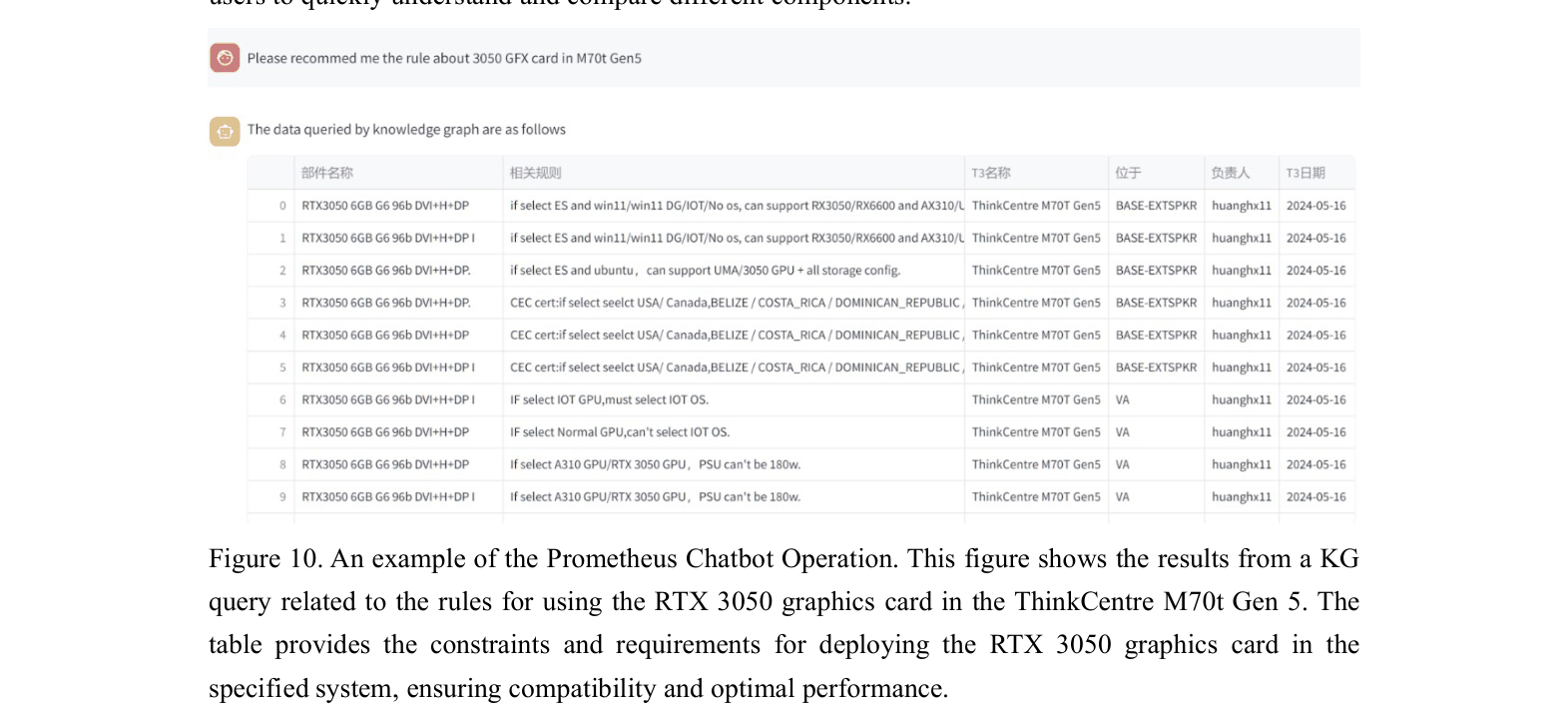
A user asks 'Tell me the GFX3050 T3 rule about M70t Gen5.' A standard keyword search might fail or return irrelevant parts. Prometheus extracts '3050' and 'M70t Gen5', generates a Cypher query to match specific `name` and `project name` attributes in the KG, and retrieves the exact T3 compatibility rule.
Key Novelty
LLM-Driven Knowledge Graph Querying for Hardware
- Integrates a Neo4j graph database storing component compatibility rules with GPT-4 via LangChain.
- Uses the LLM primarily as a translation layer to convert natural language into Cypher queries (graph database query language) rather than relying on the LLM's internal knowledge base.
- Combines top-down (rule-based) and bottom-up (data extraction) approaches to build a specialized Knowledge Graph from Lenovo's proprietary databases.
Architecture
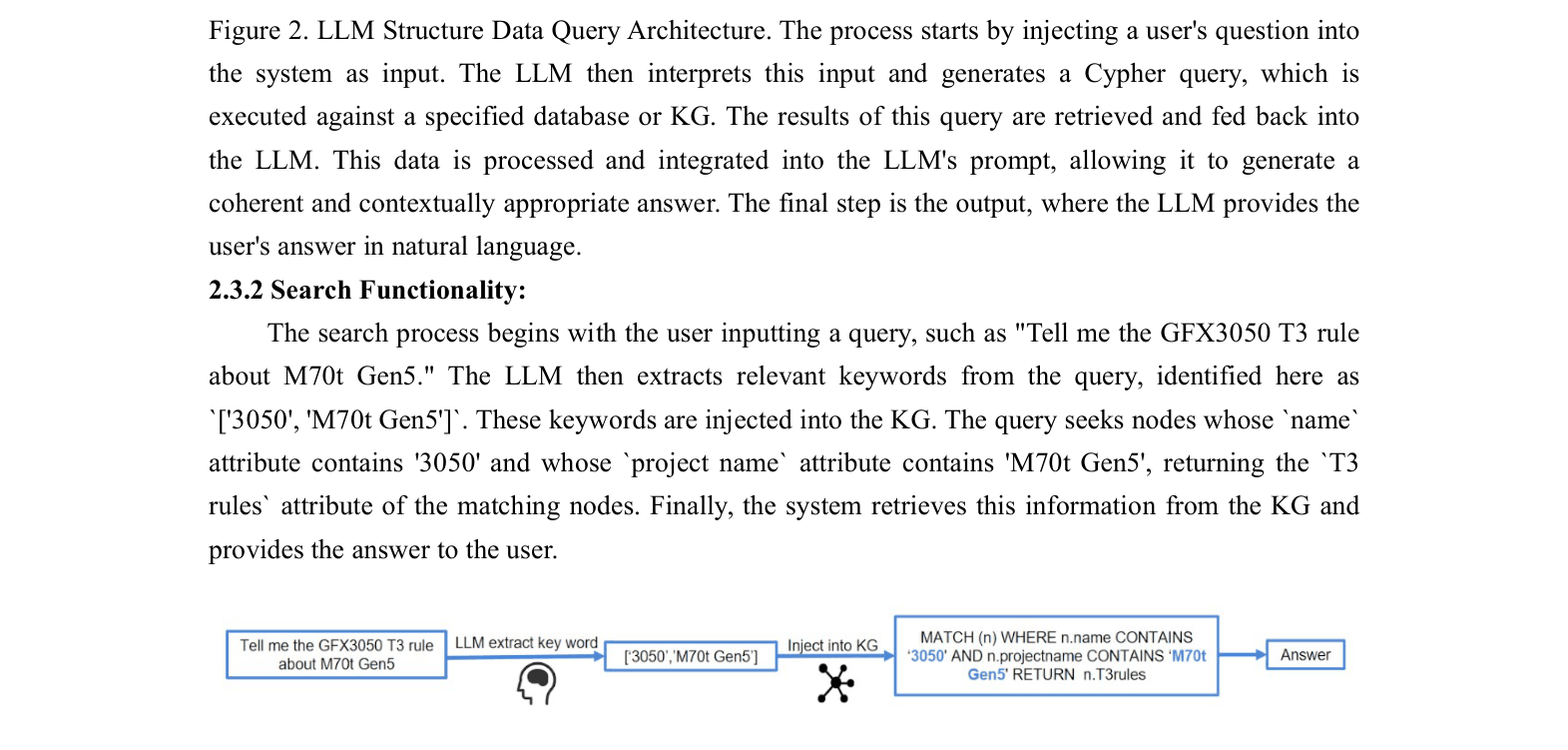
The LLM Structure Data Query Architecture. It illustrates the cyclic flow of data: User Question → LLM → Cypher Query → Knowledge Graph → Result Data → LLM → Natural Language Answer.
Evaluation Highlights
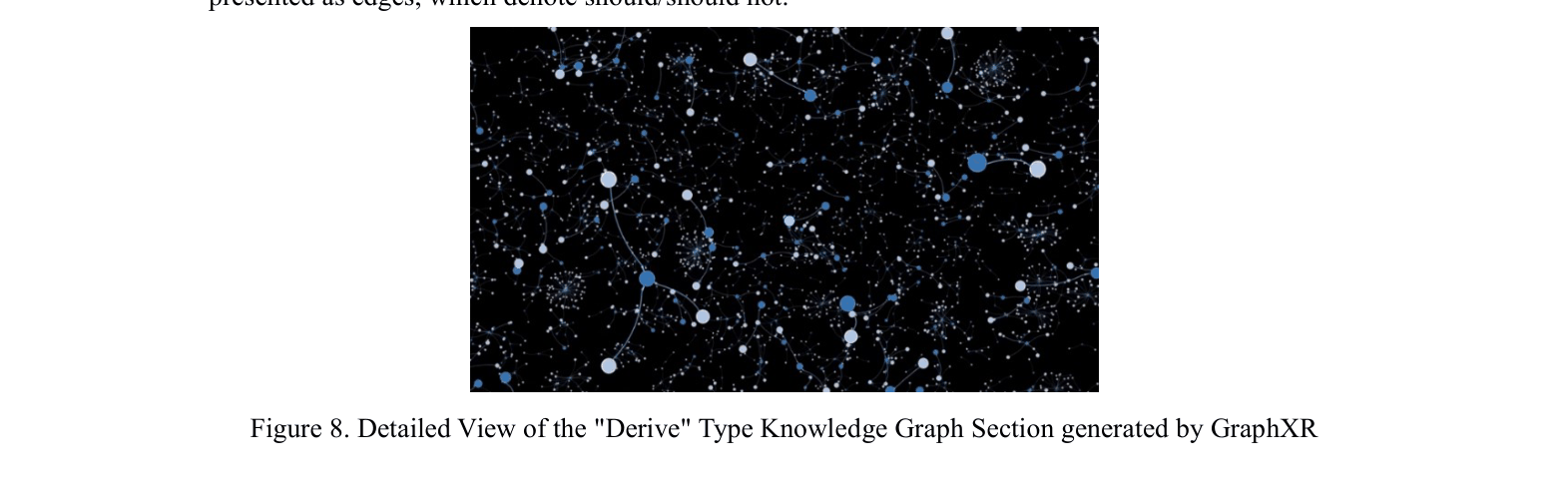
- Constructed a Knowledge Graph containing 32,776 nodes and 24,971 relationships specifically for the 'Derive' rule type of computer components.
- Demonstrated successful conversion of complex natural language queries (e.g., compatibility checks for specific GPU and chassis models) into executable Cypher queries.
- Successfully deployed as an internal tool within Lenovo for desktop computing development.
Breakthrough Assessment
4/10
This is a practical application paper demonstrating a standard RAG/Tool-use pattern (Text-to-Cypher) in a specific industrial domain. While useful for Lenovo, it applies existing techniques (LangChain, GPT-4, Neo4j) rather than introducing novel ML architectures or algorithms.