📝 Paper Summary
Adversarial Attacks on Recommender Systems
LLM-based Agents
The paper introduces TextSimu, a black-box attack using collaborative LLM agents to rewrite item descriptions to mimic popular items, revealing that ID-free recommenders are vulnerable to semantic manipulation despite resisting traditional text attacks.
Core Problem
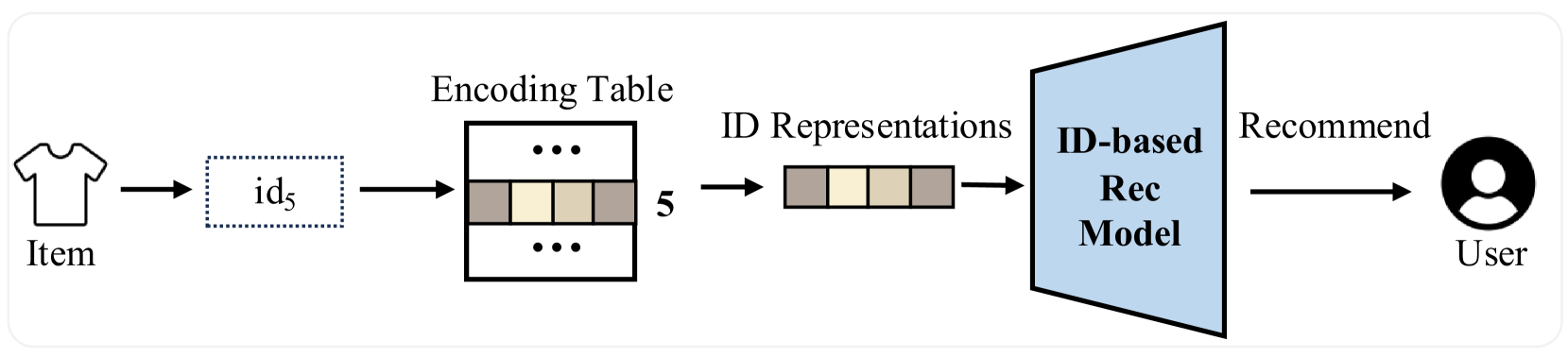
ID-free recommender systems, which rely on encoding item text to solve cold-start problems, are assumed to be robust, but their vulnerability to semantic text manipulation is unexplored.
Why it matters:
- Traditional injection attacks (creating fake users) are prohibitively expensive (requiring >0.1% of the user base) and hard to execute at scale
- Existing NLP text attacks (e.g., character flipping) fail in recommender settings because semantic encoders ignore minor perturbations
- Merchants control item text, allowing them to rewrite descriptions entirely to manipulate recommendations without detection
Concrete Example:
A merchant wants to promote a low-quality item. A standard NLP attack might swap a few words (ineffective). The proposed TextSimu method uses LLM agents to analyze popular items, extract keywords like 'durable' or 'trending,' and completely rewrite the item's description in the style of a bestseller, tricking the semantic encoder.
Key Novelty
TextSimulation Attack (TextSimu)
- Replaces subtle adversarial perturbations (typos/swaps) with complete semantic rewriting using LLM agents acting as sales experts
- Uses a 'popularity extraction' component to identify keywords from high-performing items using TextRank, rather than relying on a single reference
- Employs a multi-agent collaboration mechanism (Thinking & Discussion stages) where diverse agent personas debate and refine the promotional text to maximize recommendation likelihood
Architecture
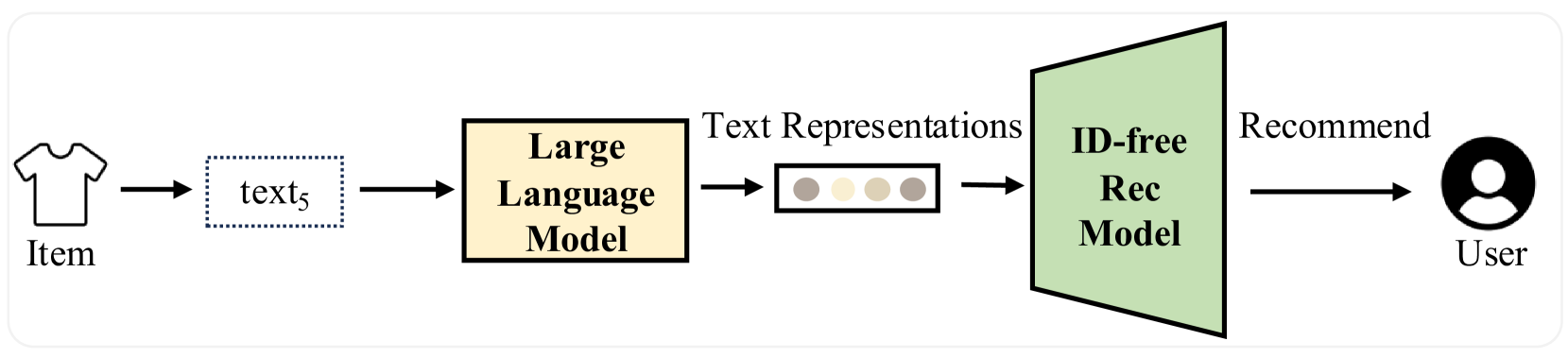
Overview of the TextSimu attack framework
Evaluation Highlights
- Traditional text attacks (TextBugger, TextFooler) achieve Hit Ratio@50 < 0.1%, proving they are ineffective against ID-free recommenders
- Injection attacks (Random/Bandwagon) are effective but require injecting >0.1% of the total user base, confirming they are cost-prohibitive compared to text rewriting
Breakthrough Assessment
8/10
Identifies a critical blind spot in the emerging field of ID-free recommendation. While the provided text lacks the final performance numbers for the proposed method, the shift from perturbation to semantic simulation is a significant conceptual advance.