📝 Paper Summary
Cross-Domain Recommendation (CDR)
Zero-shot Recommendation
LLM4CDR leverages Large Language Models to transfer user preferences from source to target domains without training, using purchase history sequences and generated cross-domain feature guidance.
Core Problem
Traditional Cross-Domain Recommendation (CDR) systems struggle when the target domain has absolutely no user history (cold-start) and require extensive training data to align domains.
Why it matters:
- Data sparsity and cold-start problems prevent effective recommendations in new or low-resource domains
- Existing CDR methods usually require some overlapping user/item interaction data to train embeddings, which may not exist for new domains
- The potential of LLMs to perform zero-shot knowledge transfer between disparate domains using only text history is underexplored
Concrete Example:
A user has bought many 'CD & Vinyl' items but has never interacted with the 'Movies & TV' section. A standard recommender cannot suggest movies. LLM4CDR uses the CD history (e.g., 'Pink Floyd albums') to infer preferences (e.g., 'Musical Documentaries') and rank movie candidates.
Key Novelty
LLM4CDR Pipeline
- Treats recommendation as a conditional text prediction task where source domain history acts as the context for target domain ranking
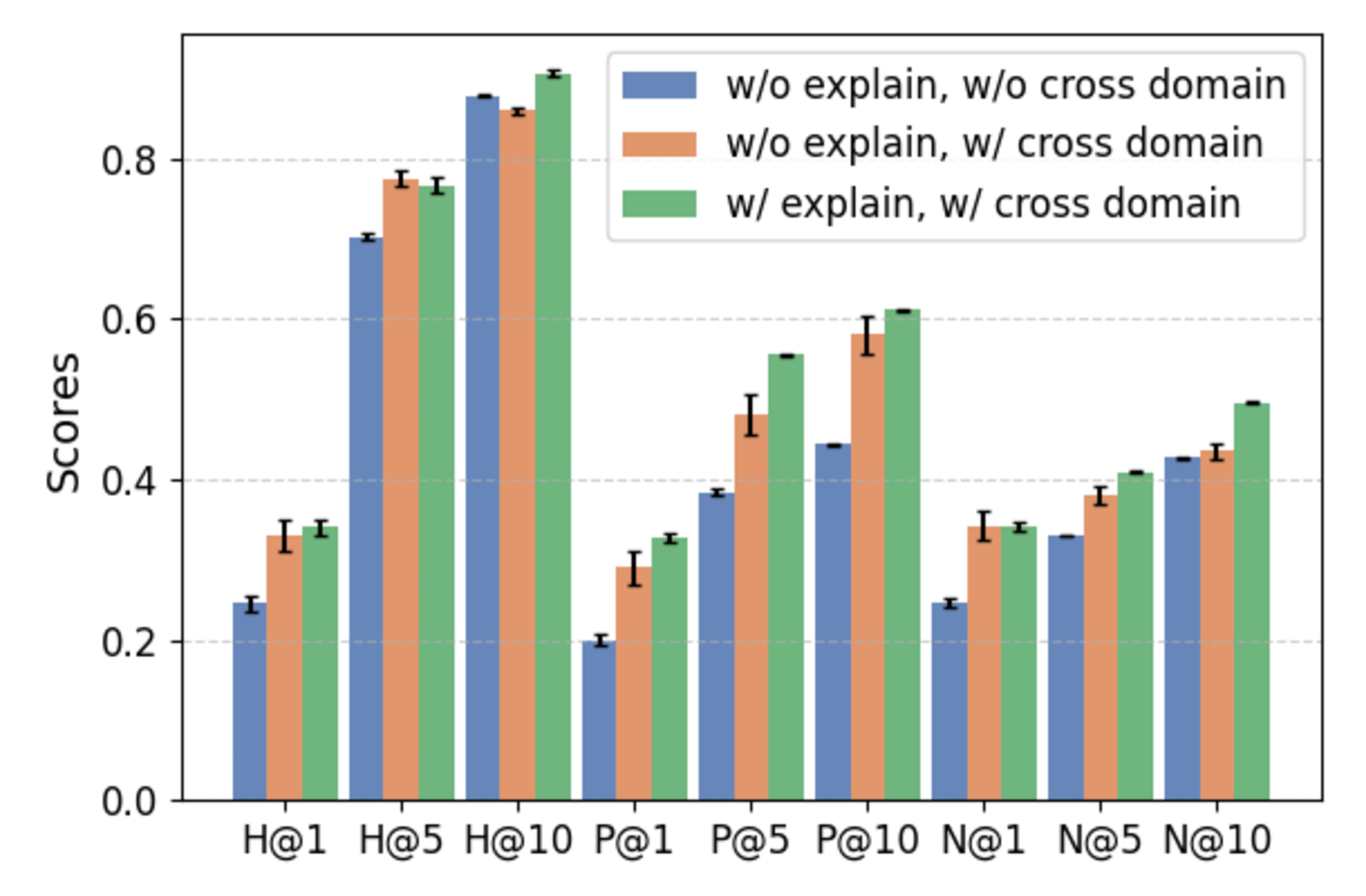
- Utilizes a two-step prompting strategy where the LLM first generates 'recommendation guidance' (shared features like genre or theme) to bridge the domain gap before making predictions
Architecture
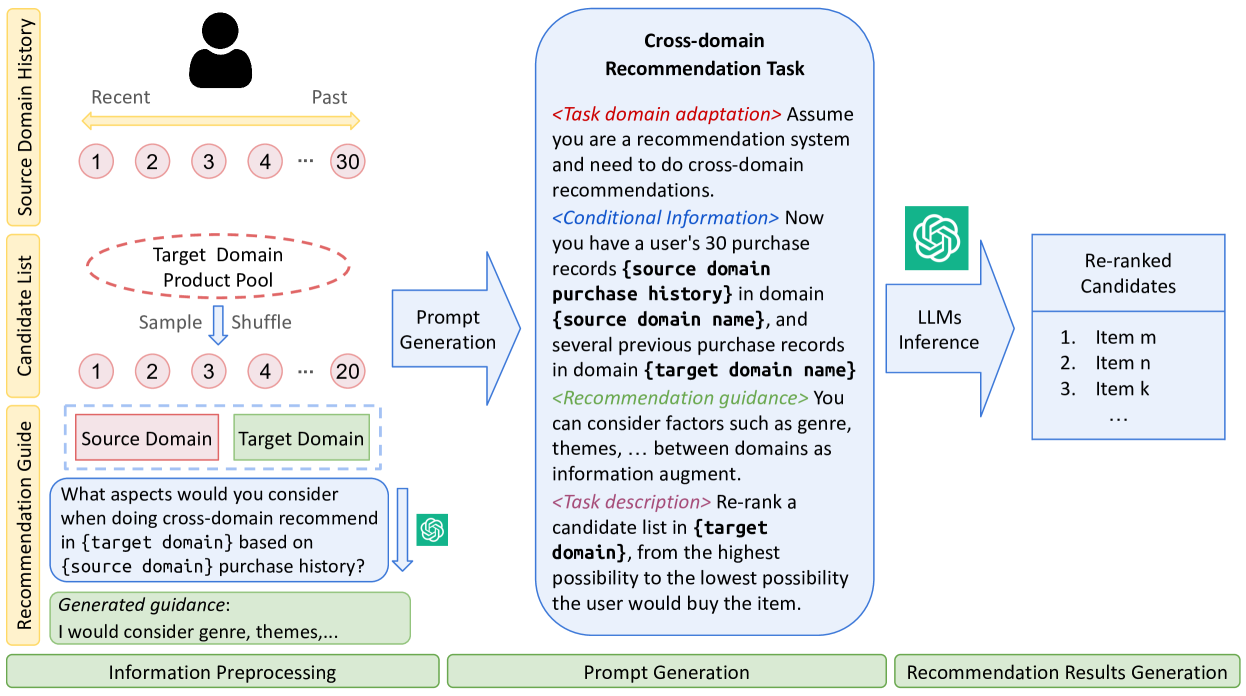
The LLM4CDR pipeline illustrating the prompt construction process.
Evaluation Highlights
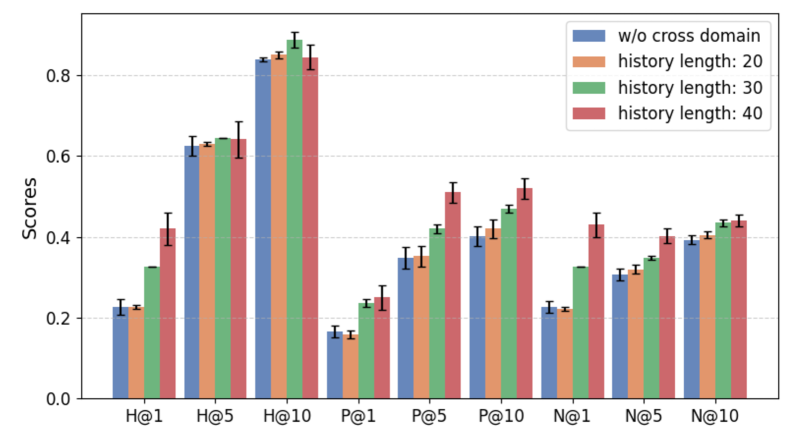
- +64.28% improvement in MAP@1 when using GPT-3.5 to transfer knowledge from 'CD & Vinyl' to 'Movies & TV' compared to using no source history
- Performance gains are strictly dependent on domain proximity; utilizing source history from unrelated domains (large domain gap) actually degrades performance
- Larger models (GPT-4) show significantly higher performance gains from cross-domain context compared to smaller models or Ollama-based local models
Breakthrough Assessment
7/10
A strong empirical study demonstrating LLMs' zero-shot transfer ability in recommendation. While the pipeline is prompt-based rather than architectural, the findings on domain gaps and 'guidance' prompts are valuable for practical deployment.